Introduction
Specialty store owners face a daily operational reality that big-box retailers rarely encounter: managing complex, seasonal, or niche inventory while delivering the expert service customers specifically seek—all with lean teams and tight margins. A garden center juggling 200 seed varieties ahead of spring planting season and a sporting goods retailer preparing for hunting season share the same pressure point.
Fragmented systems—a basic register here, spreadsheets there, manual loyalty cards somewhere else—create compounding costs that grow harder to resolve as the business scales. 63% of retail managers encounter stock their system says is available but cannot actually locate at least weekly, a problem that hits specialty retailers especially hard during peak demand periods.
"Integrated POS" gets used broadly, but its real value shows up in the day-to-day decisions specialty retailers make: restocking shelves before a season peaks, pulling up a customer's purchase history at checkout, or reading accurate margin by vendor without reconciling three spreadsheets. This article covers the specific, measurable advantages integrated POS systems deliver for specialty stores—operational outcomes you can actually track.
Key Takeaways
- An integrated POS unifies sales, inventory, customer data, and reporting in one platform instead of juggling disconnected tools
- The biggest wins come from real-time inventory control, faster checkout, and a clear view of your financials in one place
- Without integration, specialty retailers face rising error rates, inventory blind spots, and mounting labor costs
- Benefits build over time — consistent use produces sharper data and smarter decisions
- Treating integrated POS as an operational backbone—not just a checkout tool—produces the strongest results
What Is an Integrated POS System?
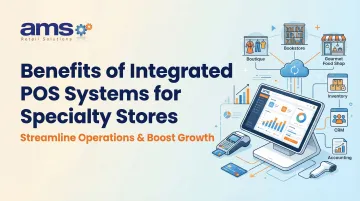
An integrated POS is a single system connecting point-of-sale transactions with inventory management, customer records, reporting, and back-office operations—so data flows automatically without manual re-entry. When a customer buys a bag of premium dog food, the system simultaneously processes payment, deducts inventory, updates the customer's purchase history, and records the transaction in your financial reports. All of this happens instantly, without staff touching a spreadsheet or calculator.
Specialty retailers typically use this at three touchpoints:
- Sales counter — checkout and payment processing
- Sales floor — mobile devices for customer assistance and inventory lookups
- Back office — purchasing decisions, reordering, and financial analysis
The real value is accurate data, faster decisions, and lower operational friction at every stage of the retail day.
Key Advantages of Integrated POS for Specialty Stores
Every advantage covered here ties to something you can measure: cost savings, time recovered, shrink reduced, customer retention improved. Specialty retail amplifies these outcomes — you're managing complex inventory, serving customers who expect expertise, and doing it with a lean team. The gap between a disconnected setup and an integrated one shows up fast on the bottom line.
Real-Time Inventory Control
For specialty stores, real-time inventory control means seeing accurate stock levels across every SKU—whether that's 200 seed varieties, dozens of pet food brands, or seasonal outdoor gear—without manual counts or batch updates. Every sale, return, and purchase order automatically updates inventory, so stock levels stay current and staff can answer availability questions instantly at the counter.
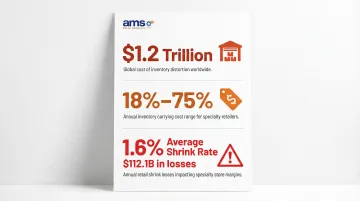
Real-time inventory eliminates the twin problems of stockouts and overstocking. Global inventory distortion costs retailers $1.2 trillion annually, with out-of-stocks accounting for two-thirds of that total. For a garden center during spring planting or a sporting goods store during hunting season, a stockout means lost revenue you simply can't recover.
Overstocking is the other side of the same problem. Carrying costs can run 18% to 75% of inventory value annually — cash tied up in product that isn't moving.
Real-time tracking also reduces shrink. When every item is tracked and accounted for automatically, discrepancies surface faster and loss—whether from theft, spoilage, or receiving errors—is caught earlier. The National Retail Federation reports average shrink rates of 1.6%, representing $112.1 billion in annual losses. For specialty retailers operating on thin margins, even small improvements in shrink reduction directly impact profitability.
AMS Retail's POS solution runs on NCR Voyix Counterpoint, which is built specifically for this kind of inventory complexity — detailed item attributes, vendor management, and automated reorder points that fire before you run out.
KPIs impacted:
- Inventory shrink rate
- Stock turnover rate
- Days of supply
- Order accuracy
- Carrying costs
When this advantage matters most: During peak seasonal periods, for stores with high SKU counts, and for retailers managing perishable or high-value items where inventory accuracy directly affects cash flow and customer satisfaction.
Faster, More Personalized Checkout and Customer Experience
This advantage covers two connected outcomes: speed at the point of sale and the ability to deliver personalized experiences that specialty store customers expect from an expert retailer. Pricing, promotions, and product details are pulled automatically—no manual lookup or price checks. Customer purchase history, loyalty points, and preferences are available at the register, so staff can make relevant recommendations and apply rewards instantly.
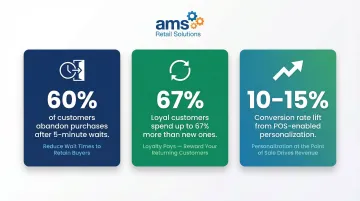
Specialty store customers choose independent retailers over big-box alternatives for expertise and relationship — not price. Integrated POS gives your staff the data to deliver on that promise without slowing down the line. Loyal customers spend up to 67% more than new ones, and stores where repeat customers drive over half of revenue see dramatically lower unprofitability rates than those dependent on one-time buyers.
Faster transaction processing directly reduces queue time, which affects customer satisfaction and conversion. Studies indicate that wait times over five minutes lead to nearly 60% of customers abandoning their purchase, and 80% report avoiding stores entirely due to long lines. During weekend rushes or seasonal peaks, this efficiency advantage compounds—the same team serves more customers without additional headcount.
Integration-enabled personalization also drives measurable sales lift. POS-enabled personalization can boost conversion rates by 10-15%, with customers enrolled in loyalty programs showing 63% higher average order values.
KPIs impacted:
- Average transaction time
- Customer retention rate
- Loyalty program enrollment
- Average order value
- Labor hours per transaction
When this advantage matters most: During peak traffic periods (weekend rushes, seasonal peaks) and in stores where customer relationship and repeat business are central to revenue.
Unified Data and Financial Visibility
In practice, this means all sales, inventory, and purchasing data flows into a single reporting environment—so owners and managers can see margin, cash flow, and performance trends without manually reconciling spreadsheets or switching between systems. Sales at the register automatically update revenue records, inventory deductions flow into cost of goods calculations, and purchase orders tie back to supplier costs—creating a connected picture of the business in real time.
For specialty retailers running lean operations, time spent manually pulling data from disconnected systems is time not spent on the floor. Over 51% of small businesses still rely on manual spreadsheets, which carry a baseline error rate exceeding 3.7%. Those errors quietly erode margin through pricing mistakes, receiving discrepancies, and inaccurate cost tracking — problems that rarely surface until the damage is done.
Unified reporting gives owners accurate gross margin visibility by product, category, or vendor—enabling smarter buying decisions. When margins and costs are visible in real time, owners can act on slow movers, adjust pricing, or capitalize on high-demand items before the season ends. Retail executives report that 71% believe they're gaining competitive advantage through stronger cost control, with margin leadership and automation central to protecting profitability.
KPIs impacted:
- Gross margin by product/category
- Cost of goods sold accuracy
- Cash flow predictability
- Reporting time (hours per week)
- Pricing error rate
When this advantage matters most: For multi-location specialty retailers, stores with diverse supplier relationships, and during post-season analysis when buying decisions for the next cycle are made.
What Happens When an Integrated POS Is Missing
Specialty stores running disconnected tools—a basic register, a separate spreadsheet for inventory, manual loyalty cards—face compounding problems that grow harder to resolve as the business scales.
Common consequences include:
Without real-time inventory visibility, reordering becomes reactive—stockouts hit during peak season, or overbuying drives up carrying costs. Manual reconciliation between systems introduces pricing and receiving errors that erode margin without obvious warning. Purchasing decisions based on what the system says rather than what's actually on the shelf are, at best, educated guesses.
Staff without access to purchase history, loyalty balances, or active promotions can't deliver the personalized service specialty stores compete on. A customer who chose you over a big-box store precisely because they expect to be recognized ends up treated like a first-time visitor at every checkout.
Labor costs climb when staff hours disappear into manual data entry, end-of-day reconciliation, and inventory counts that an integrated system would handle automatically. That overhead makes it harder to justify the lean team structures most specialty stores depend on—and leaves less capacity for the floor time that actually drives sales.
How to Get the Most Value from Your Integrated POS
An integrated POS delivers its full value when treated as an operational backbone—the single source of truth for sales, purchasing, and customer data—not just a transaction tool.
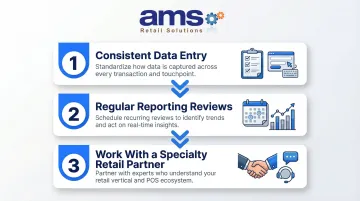
Three conditions amplify the value of integration:
- Consistent data entry: Train staff on item lookup, receiving, and customer capture processes. Reports are only as reliable as the data going in — skipped steps in receiving or checkout degrade everything downstream.
- Regular reporting reviews: Build a weekly cadence for reviewing margin by category, loyalty trends, and inventory velocity. During seasonal peaks, shift to daily reviews to catch problems before they compound.
- Work with a specialty retail partner: Implementation and ongoing support shape how well the system fits your operation. AMS Retail Solutions provides single-source setup, customization, and 24/7 support configured for specialty retailers — not a generic retail template.
Conclusion
An integrated POS earns its place in specialty retail by solving the problems that actually cost stores money: inventory that's too complex to track manually, margins that erode without clear reporting, and customer relationships that fall flat when there's no data to support them. These gains build on each other. The data gets richer, the reports get more useful, and the operational habits that form around a connected system get harder for competitors relying on patchwork tools to match.
For specialty retailers managing seasonal demand spikes, complex SKU counts, and customer relationships that depend on personalization, an integrated POS is what keeps daily operations from becoming daily firefighting — freeing up time and attention for the work that actually grows the business.
Frequently Asked Questions
What is an integrated POS?
An integrated POS connects sales, inventory, customer data, and back-office reporting into one platform—so all data syncs automatically without manual re-entry between systems. No more reconciling spreadsheets or juggling disconnected tools.
How does an integrated POS help specialty stores manage stock levels?
Every transaction, return, and purchase order updates inventory in real time, giving specialty retailers accurate stock counts across all SKUs and triggering reorder alerts before stockouts occur. Manual counts become unnecessary, and both overstock and shortage risks drop significantly.
Which POS system is best for specialty stores?
The best system depends on your specific inventory complexity, customer management needs, and scale. Solutions like NCR Voyix Counterpoint, offered through AMS Retail Solutions, are built specifically for specialty retail environments with features tailored to garden centers, pet supply, feed stores, and sporting goods retailers.
Can an integrated POS handle seasonal inventory fluctuations?
Yes. Integrated systems with demand forecasting and automated reorder triggers help specialty stores stock up ahead of seasonal peaks without over-committing, using historical purchasing data to guide smarter buying decisions.
Does an integrated POS reduce labor costs for specialty retailers?
By automating inventory tracking, loyalty management, and reporting, an integrated POS cuts the hours staff spend on manual reconciliation tasks. Lean teams can focus on customers instead of back-office administration, which matters most during seasonal rushes.
What happens if the internet goes down — can the POS still operate?
Some integrated POS systems include offline capability, meaning transactions can still be processed without a network connection and data syncs once connectivity is restored. This is an important consideration for specialty stores in areas with unreliable connectivity or during network outages.