Introduction
Most POS systems are built for high-volume commodity sales — not for the workflows that define specialty retail. A generic platform designed for apparel or electronics can't handle live plants with expiration dates, bulk feed sold by weight, or serialized firearms inventory.
Choosing the wrong POS creates measurable operational friction. Inventory gaps emerge when the system can't track multi-variant SKUs or variable units of measure. Checkouts slow down when pricing rules don't support quantity breaks or member discounts. Reporting falls short when you need seasonal performance data or vendor analysis, not just daily transaction totals. That combination drives up shrink, compresses margins, and sends customers elsewhere.
The right platform handles those workflows natively — automating operations, reducing shrink, and giving customers a faster checkout experience. This guide breaks down the top POS platforms for specialty retail: what they do well, where they fall short, and how to evaluate them before committing.
Key Takeaways
- Specialty retailers need POS systems built for complex inventory, vendor management, and niche workflows—not generic platforms repurposed for their industry
- The best platforms offer real-time inventory tracking, flexible pricing rules, solid reporting, and offline capability
- NCR Voyix Counterpoint (via AMS Retail), Lightspeed, Clover, KORONA POS, and Square lead the specialty retail POS market
- Key selection criteria: industry fit, scalability, hardware reliability, integration depth, and quality of ongoing support
- Single-source providers that handle software, hardware, and support reduce complexity and keep operations running smoothly
What Makes Specialty Retail POS Different
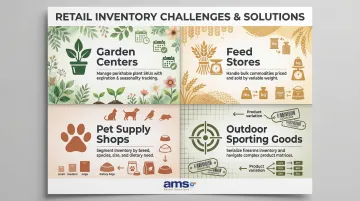
Specialty retail covers niche categories that generic POS systems simply weren't built to handle. The operational realities vary by vertical, but the underlying problem is the same: standard flat product catalogs can't keep up. Consider what these businesses actually manage:
- Garden centers: thousands of plant SKUs with botanical varieties and expiration dates
- Feed stores: bulk products sold by weight with variable units
- Pet supply shops: inventory segmented by breed, species, and size
- Outdoor sporting goods: serialized firearms and complex product matrices
These workflows require deep inventory customization — not workarounds.
Inventory complexity sits at the core of every specialty retail challenge. Seasonal fluctuations, perishable goods, multi-variant products, and high-SKU vendor catalogs create management problems that compound quickly. A garden center might buy plants by the flat and sell them individually — that alone requires flexible unit-of-measure conversions most generic platforms don't support. A farm store tracking custom feed blends needs ingredient-level detail, not a simple SKU count. Generic systems that can't handle these workflows typically require expensive customization or error-prone manual workarounds.
Pricing rules directly shape margins, and specialty retailers need more than a standard rate card:
- Quantity pricing for bulk purchases
- Member or loyalty pricing for repeat customers
- Seasonal markdowns tied to product lifecycles
- Mix-and-match promotions for bundled products
Generic platforms rarely support these natively, pushing retailers toward add-ons or manual price adjustments that slow checkout and introduce errors.
Reporting requirements run deeper than daily sales totals. Specialty retail owners need to know which product categories perform in which seasons, how individual vendors stack up on margin, and what purchase patterns their best customers show. Knowing that spring annuals outperform perennials in April — or that one vendor's feed line consistently delivers higher margins — requires business intelligence tools designed specifically for specialty operations, not generic dashboards built for standard retail.
Offline Capability Is Non-Negotiable
Specialty retailers frequently operate at outdoor markets, trade shows, or rural locations where internet connectivity is unreliable. According to a 2025 study by FreedomPay and Dynatrace, payment system disruptions put approximately $44.4 billion in U.S. retail and hospitality sales at risk annually. Consumers wait an average of only seven minutes before abandoning a purchase during an outage. For specialty retailers, offline POS functionality is a core business continuity requirement, not a nice-to-have.
Best POS Platforms for Specialty Retailers
These platforms were selected based on their ability to handle the distinct operational demands of specialty retail—including complex inventory, flexible pricing, multi-channel capability, and reliable support.
NCR Voyix Counterpoint (via AMS Retail Solutions)
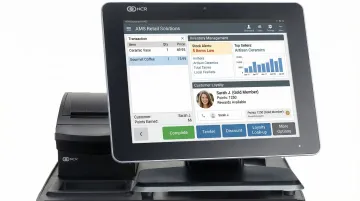
NCR Voyix Counterpoint is a retail POS platform built through decades of development for specialty retail environments. AMS Retail Solutions delivers it as a single-source provider, combining retail-hardened hardware, implementation, and 24/7 ongoing support. That single-source model makes it a strong fit for garden centers, farm markets, pet supply stores, and outdoor sporting goods retailers who want one partner for software, hardware, and support—not three separate vendors to coordinate.
What sets it apart:
- Operates offline via a store-and-forward model when the network goes down
- Supports deep inventory customization for specialty SKUs and complex product catalogs
- Includes built-in customer loyalty tools and vendor purchase order management
- Eliminates multi-vendor complexity through AMS Retail's single-source delivery
| Aspect | Details |
|---|---|
| Key Features | Real-time inventory tracking, offline POS capability, customer loyalty program, barcode and label printing, vendor purchase order management, customizable reporting |
| Best For | Garden centers, nurseries, farm markets, feed and seed, pet supply, outdoor sporting goods retailers |
| Support & Scalability | 24/7 support from AMS Retail; scales from a single store to multi-location operations |
Lightspeed Retail
Lightspeed is a cloud-based retail POS built for mid-to-large specialty retailers that want strong inventory management and omnichannel tools with e-commerce integration and supplier tracking included.
What sets it apart:
- Integrates supplier catalogs through its NuORDER platform for streamlined reordering
- Offers advanced purchase order management across multiple channels
- Includes a dedicated account manager on higher-tier plans
- Built for specialty retailers managing large or complex vendor catalogs
Third-party reviews from NerdWallet describe it as "a good match for retail businesses with multiple locations" due to its inventory depth.
| Aspect | Details |
|---|---|
| Key Features | Omnichannel inventory sync, supplier tracking and reordering, built-in loyalty, e-commerce integration, analytics dashboards |
| Best For | Mid-size to growing specialty retailers with multi-channel or multi-location operations |
| Pricing | Starts at $89/month (billed annually); verify current plan tiers for updated pricing |
Clover POS
Clover is a modular POS platform popular with established brick-and-mortar retailers. It pairs retail-hardened hardware with a flexible app marketplace, letting specialty retailers add modules for loyalty, inventory, and employee management as needed.
What sets it apart:
- Supports real-time inventory with barcode scanning across all plans
- Includes 24/7 support and offline payment acceptance as standard
- Delivers hardware and software from a single source
- Requires Clover's own merchant account—devices cannot be used with third-party payment processors
| Aspect | Details |
|---|---|
| Key Features | Real-time inventory, barcode support, offline payments, gift cards, employee shift scheduling, 24/7 support |
| Best For | Established brick-and-mortar specialty retailers looking for a reliable hardware-software bundle |
| Pricing | Starts at $14.95/month plus hardware cost; verify current hardware bundle pricing |
KORONA POS
KORONA POS is a cloud-based system designed for specialty and niche retailers, with flexible payment processing and strong inventory management built around customizable reporting.
What sets it apart:
- Processor-agnostic design lets retailers choose their own payment provider for lower rates
- Month-to-month pricing avoids long-term contract lock-in
- Customizable customer fields, pricing rules, and tax settings give granular operational control
- More configuration depth than most platforms at its price point
| Aspect | Details |
|---|---|
| Key Features | Multi-location inventory syncing, custom reporting dashboards, advanced cashier functionality, accounting integrations, flexible payment processing |
| Best For | Multi-location specialty retailers who want processor flexibility and deep customization |
| Pricing | Starts at $59/month; verify current tier details for updated plan features |
Square for Retail
Square for Retail is a cloud-based POS with a free tier and fast setup, making it a common starting point for newer or smaller specialty retailers that need inventory management, in-person and online sales, and straightforward reporting without heavy upfront cost.
What sets it apart:
- Fastest setup of any platform on this list, with minimal training required
- Automatic inventory syncing across in-person and online channels
- Built-in tools for both brick-and-mortar and online selling
- Locks users into Square's payment processing; inventory depth may not scale for complex specialty operations
| Aspect | Details |
|---|---|
| Key Features | Real-time inventory sync, online/in-person selling, gift cards, mobile wallet support, analytics dashboards, employee shift scheduling |
| Best For | Small or early-stage specialty retailers prioritizing ease of use and low upfront cost |
| Pricing | Free plan available; paid plans start at $49/month—verify current pricing for updated plan structure |
How We Chose the Best POS Platforms for Specialty Retailers
Platforms were assessed specifically against the operational realities of specialty retail—not general retail benchmarks. A common mistake buyers make is selecting a POS based on brand recognition or low monthly pricing alone, without verifying that the system can handle their actual inventory structure, vendor workflows, or seasonal demand patterns.
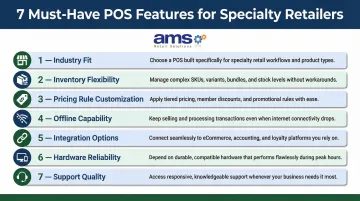
Evaluation criteria included:
- Industry-fit for specialty categories: garden, farm, feed, pet, and sporting goods
- Inventory flexibility and depth across multi-variant SKUs, variable units, and serialized items
- Pricing rule customization for quantity breaks, member pricing, and seasonal markdowns
- Offline capability at outdoor markets and rural locations where connectivity is unreliable
- Integration options covering e-commerce, accounting, and purchase orders
- Hardware reliability with retail-hardened equipment built for demanding environments
- Long-term support quality, including 24/7 availability for businesses that can't afford downtime
Scalability was also a key factor. The best POS for a specialty retailer should accommodate growth — adding a second location, launching an online store, or expanding product lines — without forcing a full platform migration. According to a 2025 Retail Systems Research report, 33% of retailers say their current POS is actively holding them back from innovation, with poor omnichannel support and weak multi-location inventory management as the top reasons for switching.
Conclusion
Specialty retailers have distinct operational needs than general retailers. Selecting a POS platform that understands those needs—from complex inventory attributes to offline capability and vendor management—will have a measurable impact on margins, efficiency, and customer experience.
Look beyond monthly subscription cost and evaluate the total picture: hardware reliability, depth of inventory tools, quality of support, and whether the platform can scale with your business without adding complexity.
The stakes are real. The U.S. pet industry alone reached $151.9 billion in 2024, while outdoor sporting goods recorded $28 billion in sales. At that scale, the wrong POS system doesn't just slow you down—it costs you.
AMS Retail Solutions provides NCR Voyix Counterpoint to specialty retailers across garden centers, farm markets, pet supply stores, and outdoor sporting goods—covering software, retail-hardened hardware, implementation, and 24/7 support through a single provider. Reach out at 757.495.4995 to learn more.
Frequently Asked Questions
What are the four types of POS systems?
The four main types are legacy/on-premise POS (installed locally on hardware), cloud-based/SaaS POS (hosted online and accessible from any device), mobile POS (tablet or smartphone-based systems), and self-service/kiosk POS. Cloud-based and mobile systems are now the most common for specialty retail due to their flexibility and lower upfront costs.
Which is the best POS billing software for retail?
There is no universal "best"—the right choice depends on the retailer's product complexity, number of locations, and support needs. For specialty retailers, platforms with deep inventory customization and offline capability (like NCR Voyix Counterpoint) tend to outperform general-purpose billing software designed for standard retail operations.
What features should a specialty retailer prioritize in a POS system?
Prioritize complex inventory management (multi-attribute SKUs, variable units), flexible pricing rules (quantity breaks, member pricing), vendor purchase order integration, offline capability, and 24/7 support. Most general-purpose POS systems lack these features—gaps that can hurt both margins and daily operations.
Can a specialty retail POS system work without an internet connection?
Not all POS systems offer offline capability—some pause transactions entirely when connectivity is lost. Specialty retailers operating at outdoor markets, farm locations, or events should verify offline functionality before selecting a platform. NCR Voyix Counterpoint, Clover, and Square all offer offline modes, though merchants assume financial risk for those transactions.
How much does a POS system for specialty retail typically cost?
Costs range from free entry-level plans (Square) to $59–$89+/month for feature-rich platforms, with hardware adding a few hundred to several thousand dollars. Factor in total cost of ownership—software, hardware, support, and processing fees—when comparing options.
What is the difference between a generic POS and a specialty retail POS?
Generic POS systems handle standard product catalogs and simple checkouts. Specialty retail POS platforms go further—supporting complex inventory attributes, vendor-specific SKUs, seasonal pricing, variable unit measurements, and industry-specific reporting that businesses like garden centers, farm markets, and pet supply stores depend on to protect margins.