A well-integrated loyalty program—run through your point-of-sale system—transforms one-time plant buyers into year-round regulars who spend more, visit during slow months, and bring friends. The POS becomes your operational backbone: capturing customer data, tracking points, triggering rewards, and turning seasonal shoppers into committed members.
Key Takeaways
- Loyalty members spend 5–116% more per visit than non-members at garden centers — Loyalty members consistently outspend non-members at garden centers, often by a significant margin
- Points-based and tiered programs outperform generic discounts for seasonal specialty retailers
- Your POS handles enrollment, point tracking, and reward triggers automatically — no manual work needed
- Garden-specific rewards—workshops, early plant previews, off-season bonuses—drive visits when traffic is lowest
- Track member repeat rate, basket size, and revenue share to measure program health
Why Garden Center Loyalty Programs Pay Off
Customer retention costs far less than acquisition. Acquiring a new customer is 5 to 25 times more expensive than retaining an existing one, and increasing retention by just 5% can boost profits by 25% to 95%. For garden centers, where foot traffic peaks in spring and drops sharply afterward, this math hits harder—every dollar spent chasing new customers in May could have retained three existing ones in October.
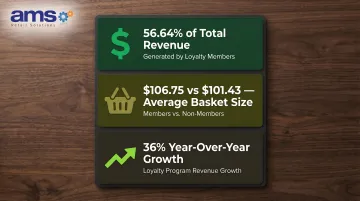
Real data shows the payoff. Analysis from Rapid Garden POS covering 45 garden centers with active loyalty programs found:
Real data shows the payoff. Analysis from Rapid Garden POS covering 45 garden centers with active loyalty programs found:
- Loyalty members drove 56.64% of total revenue despite being a smaller share of total customers
- Median basket size reached $106.75 for members vs. $101.43 for non-members — a 5.24% premium
- Year-over-year loyalty revenue grew 36%, compounding over time
Loyalty programs build a subscription mindset. Members start treating your garden center as part of their regular routine, not just a spring stop. They return for fall bulbs, holiday décor, and indoor plant season because they're accumulating points and moving toward rewards. That consistent behavior spreads revenue more evenly across twelve months instead of cramming it into eight weeks.
Only about 30% of independent garden centers currently run loyalty programs. That gap gives early adopters measurable ground over neighboring independents and big-box stores competing on price alone. When a customer weighs your nursery against the home improvement chain down the road, a loyalty program tips the decision, especially when they're 200 points from a free workshop or VIP spring preview.
The off-season is where loyalty programs earn their keep. Targeted emails to members, double-points events in November, workshop invitations in January — all of these give customers a reason to visit when they otherwise wouldn't. You stop waiting for spring to restart the revenue clock.
Choosing the Right Loyalty Program Structure for Your Garden Center
Points-Based Programs
Points programs are straightforward: customers earn points per dollar spent, redeemable for discounts, free plants, or workshop entries. Shoppers understand the model immediately, and staff can explain it in one sentence at checkout.
Key design decisions determine whether your program drives behavior or collects dust:
- Earn rate: 1 point per dollar is standard, but 5 or 10 points per dollar feels more rewarding psychologically
- Redemption thresholds: Make the first reward achievable within 2-3 visits, not 20—early wins build habit
- Bonus point triggers: Award double points for off-season purchases, eco-friendly products, or specific high-margin categories
A customer buying a $50 Japanese maple in April and a $15 bag of bulbs in October sees progress each time—reinforcing the return visit you want across every season.
Tiered Loyalty Programs
Tiered structures add aspiration. Customers progress through levels—Seedling, Blossom, Evergreen—as they accumulate points or annual spending. Higher tiers unlock experiential rewards: early access to spring perennials, VIP event invites, members-only pricing on select plants.
Consider a customer at the Seedling level in May who needs just $200 more to reach Blossom by December. That gap gives them a concrete reason to shop your holiday poinsettia sale instead of picking one up at the grocery store. Tiers motivate purchases across seasons in a way a flat discount simply can't—because the next level always feels within reach.
Top-tier members show measurably stronger loyalty. Research shows 66% of highest-tier members report satisfaction versus 44% of base-tier members, and 43% of top-tier members spend more since joining—compared to just 18% at the base tier.
Subscription / Paid Membership Programs
Paid membership flips the model: customers pay an annual fee for guaranteed benefits—free workshops, seasonal kit discounts, member-only sales. This delivers predictable revenue upfront and commits customers to return throughout the year to get their money's worth.
One framing detail matters more than you'd expect. Consumers are 11 percentage points more likely to renew a plan labeled "membership" (69%) than one called a "subscription" (58%). Call it a Garden Club Membership—not a subscription.
When to use each structure:
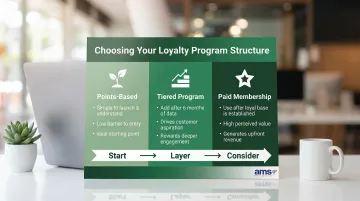
- Start with points if launching for the first time—simple, familiar, low barrier to entry
- Layer in tiers once you have 6+ months of customer data showing spending distribution
- Consider paid memberships only after you have a loyal base with annual spending patterns that justify the fee
How Your POS Powers Your Loyalty Program
A loyalty program is only as strong as the system running it. Manual punch cards break down as membership grows—staff forget to stamp, cards get lost, and you have no data on what customers actually buy. A POS built for specialty retail automates what would otherwise be error-prone: points calculate at the moment of purchase, customer profiles update in real time, and rewards flag automatically at checkout.
Every transaction logs purchase history, visit frequency, and product preferences to a customer profile. That data enables personalized rewards — a houseplant buyer receives different offers than someone who buys fertilizer and garden tools every spring. Without POS integration, this level of personalization is impossible to maintain manually.
The checkout workflow stays fast even during spring rush. When a loyalty member provides their phone number at the register, staff instantly see their tier, available points balance, and eligible rewards. Redemption takes seconds — no fumbling through cards, no manual lookups.
POS-captured email addresses and purchase data also feed your promotional calendar:
- Spring reminders to customers who bought annuals the previous year
- Off-season workshop invites to members who attended before
- Birthday offers triggered automatically
- Re-engagement messages for members who haven't visited in 60+ days
These touchpoints bring customers back during the 10 months when they're not actively thinking about gardening.
AMS Retail's NCR Voyix Counterpoint handles all of this within a single system. Built-in loyalty tools, customizable reward structures, and reporting dashboards mean your team isn't toggling between a POS and a disconnected third-party app. Sales data, inventory, customer profiles, and loyalty management stay in one place — accessible to staff in real time, with no manual syncing required.
Garden Center Reward Ideas That Drive Off-Season Visits
Beyond generic percentage-off discounts, garden-specific rewards give customers real reasons to return:
- Free workshop entry: Hands-on planting classes, floral arrangement sessions, pruning workshops
- Early access to seasonal stock: First look at fall bulbs, holiday poinsettias, spring perennials before they hit the floor
- Themed tier names: Seedling, Bloom, Evergreen—terminology that reflects your brand and creates identity
- Birthday bonus points: Automatically triggered through your POS during slow periods
- Members-only sales: Exclusive pricing events for loyalty members in January or August
Experiential rewards cost less than deep discounts and build stronger store associations. According to Bond's Loyalty Report, the "Experience" dimension drives 76% of loyalty program engagement versus just 24% for earn/burn mechanics. The customer who attended a free pruning class as a loyalty reward walks away with a story to tell — and comes back for supplies. The one who got 10% off mulch just saved money and moved on.

Research shows 91% of consumers report brand events make them more inclined to purchase, and 40% become more loyal after attending. Real-world proof: Dig Gardens, an independent garden center, reported 80% of sales from loyalty members, who spent 116% more per transaction than non-members.
How to Get More Customers Enrolled at Checkout
Enrollment friction kills loyalty programs. How your staff frames the ask makes all the difference. Instead of "Do you want to sign up for our loyalty program?"—which sounds like paperwork—try "Can I grab your email to save your points from today's purchase?" That one shift frames enrollment as a benefit, not a form.
Enrollment touchpoints available through POS-integrated systems:
- Receipt prompts with QR codes for mobile sign-up
- Email follow-up after a first purchase inviting enrollment
- Seasonal enrollment events: "Sign up this weekend and start with 200 bonus points"
- Staff prompt at checkout with instant reward for enrollment purchases
The technology handles the mechanics — but your staff closes the deal. Every team member should know:
- The program basics in one sentence: "You earn points on every purchase and redeem them for free plants, workshops, and exclusive sales"
- How to enroll a customer in under 60 seconds
- What to say when asked "what do I get?": "Members get early access to our spring shipments and invites to our hands-on workshops"
Review scripts at seasonal staff meetings. Only 21% of loyalty program members strongly agree that program representatives make them feel special — yet personal interaction at checkout is still what converts browsers into enrolled members. Train the script, then train the confidence to deliver it naturally.
Measuring Whether Your Loyalty Program Is Working
Track metrics that matter for garden centers specifically:
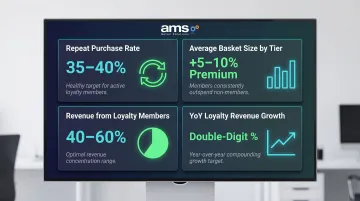
Repeat purchase rate: How often enrolled members return versus non-members. Case benchmark: Pandy's Garden Center loyalty members achieved a 36.52% repeat purchase rate. If your member repeat rate is below 20%, your rewards aren't compelling enough.
Average basket size by member tier: Compare spending across tiers and against non-members. The 5-10% premium seen in active programs indicates members are buying more per visit, not just visiting more often.
Percentage of total revenue from loyalty members: Healthy programs see 40-60% of revenue from members despite representing a smaller portion of total transactions. This concentration shows members are your most valuable customers.
Year-over-year loyalty revenue growth: Track whether loyalty-attributed revenue is growing faster than overall revenue. Double-digit growth signals compounding program effects.
Your POS reporting should surface these numbers automatically. Look for dashboards that segment loyalty versus non-loyalty sales, flag tier movement, and show point redemption rates. Low redemption rates—below 20%—signal that rewards feel unachievable or unappealing, prompting a redesign.
Once your dashboards are configured, set realistic timelines. Most garden centers see meaningful repeat rate improvements within one full season, but the compounding effect grows over 12-24 months as customer profiles deepen and purchase histories accumulate. Members who receive frequent, relevant communications spend 8% more of their category spend with that brand—which is why POS-integrated email marketing belongs in your program from day one.
Frequently Asked Questions
What's a good repeat customer rate?
Independent garden centers typically target 20-30% repeat rates across all customers. Loyalty members consistently outperform that—top programs see 35-40% repeat rates among enrolled shoppers, making member repeat rate the better number to watch.
What types of loyalty programs work best for garden centers?
Points-based programs are easiest to launch and understand, while tiered programs drive higher lifetime value. For garden centers specifically, experiential rewards like workshops and early product access combined with a points structure tend to outperform pure discount-based models.
How do I get customers to actually sign up for my loyalty program?
Enrollment peaks when staff ask at checkout, the sign-up process takes under 60 seconds, and there's an immediate incentive like bonus points on the enrollment purchase. A POS-integrated program auto-creates the profile at checkout, eliminating the extra step entirely.
Can I run a loyalty program during the off-season when traffic is low?
The off-season is when loyalty programs deliver the most unique value. Targeted email offers to members, off-season double-points events, and workshop invitations give customers reasons to visit when they otherwise wouldn't, smoothing your revenue curve year-round.
How long does it take to see results from a garden center loyalty program?
Enrollment growth and higher basket sizes for members typically appear within the first season. The most significant revenue impact builds over 12-24 months as purchase history accumulates and the member base grows.
Do I need a special POS system to run a loyalty program?
While basic punch card programs don't require a POS, any program that tracks points, personalizes rewards, and captures customer data needs POS integration to be sustainable. Manual tracking breaks down quickly as membership grows, causing errors, missed rewards, and member drop-off.