Introduction
Newly hatched spawn have 2–3 weeks to become viable fry — and everything that happens in that window determines whether a production cycle succeeds or fails. In well-prepared nursery ponds, fry survival rates reach 45–65%. In poorly managed systems, that figure drops to 25–37%. The difference comes down to management quality at the most vulnerable stage in freshwater aquaculture.
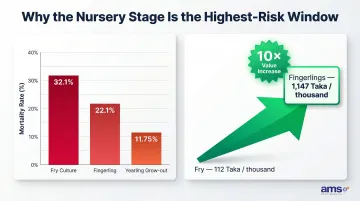
Predatory insects and fish, nutrient imbalances, dissolved oxygen crashes, and disease outbreaks can devastate fragile fry within days of stocking. A 2020 on-farm study documented that fry culture mortality (32.1%) far exceeds losses at any other stage — more than fingerling mortality (22.1%) or yearling grow-out (11.75%). These early losses compound across the production cycle, making nursery pond management one of the highest-return investments a fish farmer can make.
This guide walks through the sequential steps of pre-stocking preparation and the ongoing responsibilities of post-stocking care, providing a practical schedule to keep management on track and survival rates high.
Key Takeaways
- Pre-stocking work—pond drying, predator eradication, liming, and fertilization—must be completed 2–4 weeks before spawn arrive
- After stocking, maintain daily feeding, weekly water quality checks, and ongoing fish health surveillance
- Natural food (plankton) must be established before stocking and maintained throughout the rearing cycle
- Poor pre-stocking preparation cannot be corrected after fish arrive — and neglecting post-stocking monitoring leads to preventable losses
- A structured management schedule reduces guesswork and improves fry survival rates
Why Nursery Pond Management Matters
The spawn-to-fry stage carries the highest mortality risk in fish culture. Research across Indian aquaculture operations showed that poorly managed ponds using standard farmer practices achieved only 30–48% survival, while well-managed systems using formulated starter feeds reached 45–65%. In typical non-optimized operations, recovery rates often fall below 30%.
A nursery pond functions as an active ecosystem where conditions shift quickly and consequences are immediate. Four factors determine whether stocked spawn survives or perishes within the first 72 hours:
- Plankton availability — provides the first food source for newly hatched fry
- Dissolved oxygen levels — shallow ponds fluctuate fast, leaving little margin for error
- pH stability — even brief swings cause physiological stress in young fry
- Predator presence — unmanaged, predators can devastate a stocking in hours
Young fry have limited tolerance for stress. A single parameter falling outside safe range during this window can collapse survival rates.
Those survival rates translate directly into revenue. The economic impact is substantial: in Bangladesh aquaculture operations, fry valued at 112 Taka per thousand become fingerlings worth 1,147 Taka per thousand—a tenfold increase. Every fry lost represents lost revenue potential. Disease and environmental stress during the nursery phase account for approximately 7.6% of total farm profit losses, making prevention through proper management a clear economic priority.
Pre-Stocking Management of Nursery Ponds
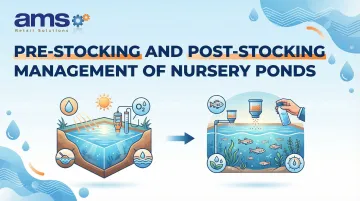
Pre-stocking management is a sequential process where each step builds on the previous one. This work typically begins 2–4 weeks before the planned stocking date.
Pond Preparation and Physical Conditioning
Dewatering and drying form the foundation of nursery pond preparation. Where possible, drain the pond completely and allow the bottom to dry for at least 15 days until visible cracks appear in the soil. This process:
- Kills unwanted organisms, pathogens, and parasite intermediate hosts through desiccation and UV exposure
- Oxidizes bottom sediments, converting harmful reduced compounds (ammonium precursors, sulfides) into less toxic forms
- Releases trapped gases like hydrogen sulfide and methane
- Facilitates physical work like debris removal and dike repair
Inspect and repair dikes during the dry period to prevent overflow during rains and block entry of wild fish. Remove all debris—stones, plastic, shells, dead vegetation—that could interfere with harvest operations later.
Ploughing or tilling the dried pond bottom improves conditions for the next crop. Till the top 5–8 cm of soil to:
- Aerate compacted topsoil and break up surface crusts
- Improve contact between soil and amendments (lime, fertilizers)
- Accelerate mineralization of organic matter
- Create favorable substrate for benthic organisms that serve as natural food
Avoid tilling deeper than 8 cm, as this can bring up anoxic sediment layers that release toxic compounds when exposed to water.
Weed and Algae Control
Excessive aquatic vegetation harms nursery pond productivity and fry health in multiple ways:
- Light reduction: Dense floating weed mats (water hyacinth, duckweed) block sunlight, suppressing phytoplankton growth
- Nutrient competition: Weeds consume nutrients that would otherwise support plankton production
- Oxygen fluctuations: Weeds produce oxygen during the day but consume it at night; decomposing weed biomass creates severe oxygen depletion
- Physical interference: Filamentous algae (Spirogyra, Pithophora) entangle in fry gills, causing suffocation
Control approaches include:
- Manual/mechanical removal: Works for small ponds or light infestations. Remove weeds completely before they decompose.
- Chemical herbicides: Require careful application and strict adherence to local regulations. Use 2,4-D for floating and marginal weeds at 2–4 quarts per surface acre; Paraquat addresses submerged species but is banned or restricted in many jurisdictions due to high toxicity.
- Biological control: Grass carp (300–400 fish at 0.5 kg each per hectare) effectively clear submerged vegetation like Hydrilla in about one month. Remove grass carp completely before stocking nursery fry to prevent competition and predation.
Complete all significant weed treatment before stocking, as decomposing plant material creates harmful conditions for delicate fry. Once the pond is cleared, the next priority is eliminating threats below the water surface.
Eradication of Predatory Fish and Insects
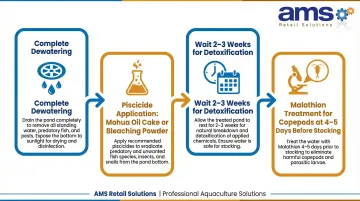
Predatory fish consume spawn directly, while "weed fish" (a common term for undesirable competitor species) deplete food, space, and oxygen. Netting alone cannot adequately reduce their numbers; chemical eradication is the primary approach.
Piscicides for fish eradication:
- Mohua oil cake: Apply at approximately 250 ppm (rates vary by product and pond depth; verify with local extension services). Toxicity lasts about 96 hours, but wait at least 2–3 weeks before stocking to ensure complete detoxification. The decomposed cake subsequently acts as organic fertilizer.
- Bleaching powder (calcium hypochlorite): Apply at 350–500 kg/ha. Toxicity persists 3–5 days.
Predatory copepod control requires an additional step specific to nursery ponds. After organic fertilization stimulates plankton growth, predatory copepods (Mesocyclops, Cyclops, Diacyclops) proliferate rapidly. These copepods attack newly hatched larvae using mechanoreception (detecting water vibrations), often killing more fry than they consume.
To address this, apply malathion at 0.25 ppm (active ingredient) approximately 4–5 days before stocking. This selectively eliminates predatory zooplankton while leaving beneficial plankton largely intact.
Liming and Fertilization
Liming serves multiple functions: buffering pH fluctuations, mineralizing organic matter, and providing mild disinfection. Lime dosage depends on soil pH:
| Soil pH | pH Category | Lime Dosage (kg/ha) |
|---|---|---|
| 4.0–4.9 | Highly acidic | 2,000 |
| 5.0–6.4 | Moderately acidic | 1,000 |
| 6.5–7.4 | Near-neutral | 500 |
| 7.5–8.4 | Mildly alkaline | 200 |
| 8.5+ | Highly alkaline | Not needed |
Apply lime at least one week before manuring to allow soil reactions to stabilize.
Fertilization for nursery ponds emphasizes organic manure to stimulate stable, diverse plankton communities. Apply approximately 10,000 kg/ha of cow dung about two weeks before stocking. This basal application provides slow-release nutrients that support sustained plankton growth without triggering unstable algal blooms.
Avoid inorganic fertilizers in nursery ponds. Their soluble nutrients trigger rapid, dense phytoplankton blooms that can crash suddenly, consuming all dissolved oxygen through decomposition and producing toxic ammonia and nitrite spikes that kill delicate fry.
Post-Stocking Management of Nursery Ponds
Post-stocking management sustains pond productivity after fish are introduced. This phase covers supplementary feeding, nutrient replenishment, environmental monitoring, and health surveillance throughout the typical 2–3 week spawn-to-fry rearing period.
Supplementary Feeding
Spawn feed voraciously on plankton immediately after stocking, but natural food depletes quickly at typical stocking densities of 4–6 million spawn per hectare. Supplementary feeding bridges this gap.
Feeding schedule for nursery ponds:
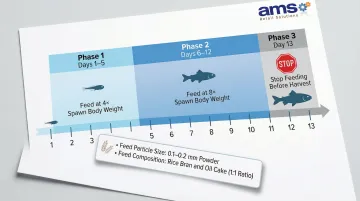
- Days 1–5: Feed at 4× initial spawn body weight daily
- Days 6–12: Increase to 8× initial spawn body weight daily
- Day 13: Stop feeding in preparation for harvest
Nursery feed must be fine powder (0.1–0.2 mm particle size) — not pellets or dough. Early-stage fry have tiny mouth gapes adapted to consuming minute organisms like rotifers. A common feed mixture is rice bran and oil cake (groundnut, mustard, coconut, or soybean) in a 1:1 ratio by weight.
Broadcast feed evenly across the pond surface. Use feeding trays to monitor consumption and clean them daily. If fish stop feeding, investigate immediately — this signals environmental stress or disease.
Periodic Fertilization
Post-stocking fertilization replenishes nutrients consumed during plankton growth. Follow this sequence:
- Apply lime first (if needed for pH correction)
- Wait at least two weeks
- Apply organic manure
- Wait another two weeks before any inorganic fertilizer (if used)
Apply fertilizer only under favorable conditions:
- Adequate sunlight
- Dissolved oxygen above 5 ppm
- Calm weather (not before storms)
Pause fertilization when:
- Nitrate or phosphate levels reach 0.5 ppm or above
- Soil organic carbon exceeds 2%
- Water transparency drops below 25 cm (indicating excessive algae)
Over-enrichment triggers overnight oxygen crashes that can wipe out the entire fry population.
Water Quality and Environmental Monitoring
Monitor these parameters regularly to maintain optimal nursery pond conditions:
| Parameter | Desirable Range | Monitoring Frequency |
|---|---|---|
| Water color | Light green to greenish-brown | Daily (visual) |
| Temperature | Species-dependent | Daily |
| pH | 7.0–8.5 | Weekly |
| Dissolved oxygen | ≥5.0 mg/L (especially at dawn) | Weekly |
| Transparency (Secchi disc) | 25–50 cm | Fortnightly |
| Free CO₂ | <15 mg/L | Weekly |
| NH₄-N (ammonium) | <0.1–0.3 mg/L | Monthly |
| NO₃-N (nitrate) | <1.0 mg/L | Monthly |
| PO₄-P (orthophosphate) | 0.01–0.05 mg/L | Monthly |
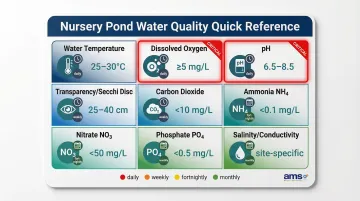
Dawn dissolved oxygen is the most critical measurement. Oxygen drops to its lowest point just before sunrise, after a full night of respiration by plankton, fish, and bacteria. Readings below 5 mg/L require immediate corrective action.
Water transparency gives a simple visual read on plankton density. Below 25 cm signals excessive algae and bloom-crash risk; above 50 cm means insufficient plankton and inadequate natural food for fry.
When water quality deteriorates, fish health follows — often within hours.
Fish Health Monitoring
Most disease outbreaks follow the host-pathogen-environment framework: environmental stress weakens fish immunity, allowing opportunistic pathogens to cause disease. Correcting environmental conditions is the primary disease prevention strategy.
Behavioral warning signs requiring immediate investigation:
- Surface gulping or "piping" (low oxygen or gill problems)
- Erratic, spiraling, or uncoordinated swimming
- "Flashing" or rubbing against surfaces (parasite irritation)
- Sudden loss of appetite or refusal to feed
- Lethargy or separation from the school
Physical warning signs:
- Excess mucus secretion (milky or greyish appearance)
- Fin erosion, fraying, or rotting
- Scale loss
- Abdominal swelling or "dropsy" (scales protruding like a pine cone)
- Skin discoloration or dark patches
- White or grey cottony growths (fungal infection)
Observe fry daily without exception. At this stage, a condition that looks minor at dawn can become a mass mortality event by evening.
Key Indicators That Your Nursery Pond Needs Immediate Attention
Water Quality Warning Signs
Persistent low dissolved oxygen (below 5 mg/L, especially at dawn) signals biological oxygen demand is outpacing production. Pause feeding and fertilization immediately. Increase aeration if possible or implement emergency water exchange.
Extreme pH swings outside the 7.0–8.5 range indicate unstable pond chemistry:
- Very low pH (below 6.5) suggests excessive organic decomposition
- Very high pH (above 9.0) indicates dense algal blooms removing CO₂ faster than it's replenished
Unusual water color shifts provide early visual warning:
- Very dense green or blue-green water indicates algal bloom (crash risk)
- Reddish or brown hue suggests specific algal species that may be toxic
- Cloudy grey or milky appearance indicates suspended clay or bacterial bloom
High turbidity that doesn't clear after fertilization ends suggests suspended particles interfering with light penetration and gill function.
Biological Warning Signs
Beyond water chemistry, biological changes in the pond offer equally urgent signals:
- Predatory insects swarming the surface—backswimmers, water boatmen, diving beetles—indicate inadequate pre-stocking eradication and can devastate fry populations within days
- Sudden plankton density crash (transparency jumping from 30 cm to 60+ cm) signals bloom collapse; decomposing algae will rapidly consume oxygen, creating hypoxic conditions
- Fry congregating at surface and margins signals low dissolved oxygen, high ammonia, or pathogen pressure — healthy fry distribute throughout the water column and feed actively
Fish Behavior and Condition Indicators
Watch for these behavioral and physical red flags in your fry population:
- Sudden drop in feeding response — fry that previously fed aggressively and now ignore feed signal environmental stress or disease onset
- Visible physical symptoms on sampled fish (see post-stocking health monitoring section) warrant immediate investigation
- Unexplained mortality, even at low levels, requires urgent attention — small losses in fry often precede mass mortality events if the underlying cause isn't corrected quickly
Nursery Pond Management Schedule
This schedule provides general guidance — actual timing varies by species, climate, stocking density, and pond history. Warmer tropical climates typically require more frequent intervention than temperate operations.
| Task | Phase | Recommended Timing |
|---|---|---|
| Pond dewatering and drying | Pre-Stocking | 15+ days before stocking |
| Dike repair and bottom tilling | Pre-Stocking | 2–3 weeks before stocking |
| Weed and predator eradication | Pre-Stocking | 2–3 weeks before stocking |
| Liming application | Pre-Stocking | 1 week before manuring |
| Basal fertilization (cow dung) | Pre-Stocking | 2 weeks before stocking |
| Malathion treatment for copepods | Pre-Stocking | 4–5 days before stocking |
| Plankton density check | Pre-Stocking | 1–2 days before stocking |
| Daily supplementary feeding | Post-Stocking | Daily throughout rearing period |
| Feeding tray cleaning | Post-Stocking | Daily |
| Fish behavior observation | Post-Stocking | Daily |
| pH and dissolved oxygen checks | Post-Stocking | Weekly (including dawn DO) |
| Water transparency assessment | Post-Stocking | Fortnightly |
| Nutrient monitoring | Post-Stocking | Monthly |
| Feeding rate adjustment | Post-Stocking | As fish grow (see feeding schedule) |
| Periodic fertilization | Post-Stocking | Every 3 weeks (if needed) |
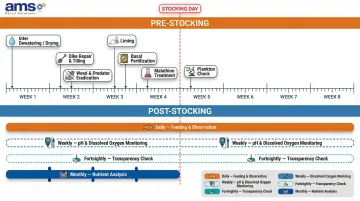
For farm markets and feed-and-seed retailers supplying aquaculture operations, tracking stock levels of inputs like feed, lime, fertilizers, and piscicides against these time-sensitive schedules is where the right software makes a real difference. AMS Retail's NCR Voyix Counterpoint-based POS system helps agricultural retailers manage this complexity — with seasonal purchasing management, purchasing history tracking, and scale integration for weight-based sales of bulk products like lime and fertilizers.
Frequently Asked Questions
What is pre-stocking nursery pond management?
Pre-stocking management refers to all preparation steps taken before introducing spawn or fry into a nursery pond. This includes pond drying, weed and predator eradication, liming, and fertilization. The goal is optimizing environmental conditions and establishing adequate natural food availability before fish arrive.
What is post-stocking management of nursery pond?
Post-stocking management covers all activities after fry are introduced—supplementary feeding, periodic fertilization, water quality monitoring, and fish health surveillance. These practices sustain the pond environment and support healthy growth through to the fingerling stage, typically over 2–3 weeks.
What is broodstock management?
Broodstock management involves caring for and conditioning mature fish kept for breeding — covering nutrition, health monitoring, and handling to ensure quality spawn production. It operates separately from nursery pond management, and brood fish should always be kept apart from young stock to prevent pathogen transfer.
How do you control predatory fish before stocking a nursery pond?
The two primary methods are complete pond dewatering (most effective) or applying fish toxicants such as mohua oil cake or bleaching powder when dewatering isn't possible. After chemical treatment, wait at least 2 weeks before stocking to allow full detoxification of the fish toxicant.
What water quality parameters should be monitored in nursery ponds?
Key parameters include pH (target 7.0–8.5), dissolved oxygen (above 5 mg/L, especially at dawn), water transparency (25–50 cm), free CO₂ (below 15 mg/L), and inorganic nutrient levels (nitrogen and phosphorus compounds). Water color serves as a simple daily visual indicator of pond productivity and potential problems.
What is the ideal stocking density for nursery ponds?
Standard stocking rates for carp spawn range from 4–6 million per hectare under normal conditions, up to 10 million per hectare in exceptionally well-prepared ponds with high plankton levels. However, survival rates decrease as stocking density increases. Research shows survival dropping from 55.8% at 3 million/ha to 46.85% at 7 million/ha, making pond preparation quality the key limiting factor.