
BOPIS means "buy online, pick up in store." In Forrester's 2024 survey, one-third of US online adults had used it in the prior three months. A working program needs the ecommerce site, POS, inventory records, store employees, and customer messages to move together.
This guide covers setup, operating practices, category-specific handling, and the metrics that tell you whether the program is improving.
Key Takeaways
- Accurate location-level inventory comes first; audit stock processes before promising pickup.
- Pilot with a narrow assortment or one store, then expand.
- Give precise pickup promises and update customers when anything changes.
- Measure accuracy, speed, labor, cancellations, and add-on sales against your own baseline.
What Is BOPIS and Why Does It Matter to Specialty Retailers?
BOPIS (buy online, pick up in store) lets customers purchase on your website and collect the order at a physical location.
The Customer Journey
A typical BOPIS order runs in six steps:

- The shopper browses online.
- They check availability at a nearby store.
- They select the store and pay.
- The store picks and stages the order.
- The shopper gets a ready-for-pickup notice.
- They collect the order.
BOPIS vs. Related Models
Know which service you are launching. Salesforce's guide defines the variations:
- Curbside pickup: a BOPIS variation where staff bring the order to the customer's vehicle.
- BOSS (buy online, ship to store): an item unavailable locally moves from a warehouse or another store to the pickup store.
- BORIS (buy online, return in store): an online purchase is returned at a physical location.
Don't blend statistics across these models. They perform differently.
The Value for Specialty Retailers
Pickup removes delivery friction and gets products into customers' hands sooner. It makes stock already on your shelves more useful and brings shoppers through the door.
That visit is the opportunity. ICSC reported that 70% of consumers collecting orders in person made additional purchases over Thanksgiving weekend 2024.
That is a holiday figure from a national survey, not an independent-retailer benchmark, so treat it as a sign of potential and measure your own attachment rate.
How to Set Up BOPIS
Start With a Readiness Assessment
Before launch, review:
- Store-level inventory accuracy and product data quality
- Ecommerce capabilities and store hours
- Payment and refund processes
- Pickup capacity and storage space
- Staffing and who owns customer service
If counts are unreliable, fix that first. ECR's research on inventory record inaccuracy warns that negative discrepancies cause delayed orders and stockouts.
Define the Pilot Assortment
Begin with items that are easy to pick and hold. Flag products that need special handling:
- Bulky or fragile items
- Live, fresh, or seasonal goods
- High-value, age-restricted, or regulated products
- Items sold by weight
- Products likely to need customer confirmation
Connect Ecommerce, POS, and Inventory
Availability, reservations, sales, cancellations, returns, and adjustments must stay consistent across channels. That means:
- Real-time or near-real-time updates
- Location-level stock visibility
- Order reservations so two shoppers can't claim the last unit
- A documented process for correcting discrepancies
An inventory buffer helps. Microsoft's commerce documentation describes subtracting a set quantity from available stock to reduce overselling, configurable by category or product. No universal buffer number exists, so set yours from your own error history.
Evaluate Your Technology
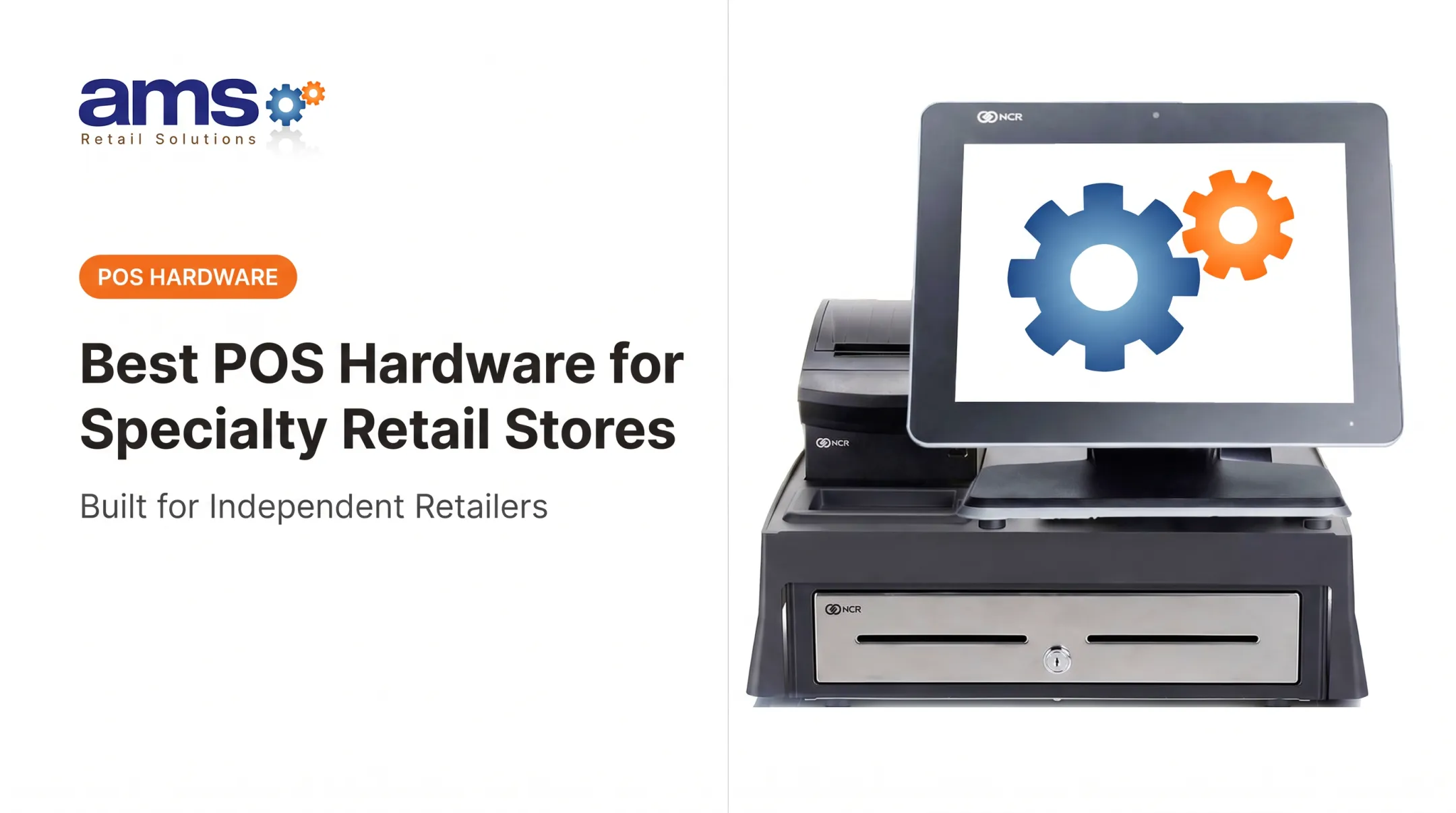
Evaluate whether NCR Voyix Counterpoint, supported by AMS Retail Solutions, is the right POS and inventory foundation for your stores. NCR Voyix documents real-time inventory management, multiple-location operation, and ecommerce integration for Counterpoint. Its public materials don't document a native BOPIS workflow, pickup reservations, or ready-for-pickup notifications. Confirm current ecommerce integrations and BOPIS-specific capabilities before you buy.
Map the Order Workflow
Assign an owner to each stage:

- Receive the order and route it to the pickup location
- Accept or reject based on stock and store capacity
- Pick the item from the correct location
- Check condition and quantity against the order
- Label it with order details for easy matching
- Stage it securely in the designated pickup area
- Mark it ready and notify the customer
- Handle exceptions such as no-shows, damages, or substitutions
Design the Pickup Experience
Choose a visible pickup point and an organized staging area. Set ID or order-confirmation rules, pickup deadlines, and escalation steps. Train employees on the handoff before launch, not after the first complaint.
BOPIS Best Practices for Reliable Operations and Better Customer Experience
Make Honest Promises
Show store-specific availability. State cutoff times and pickup windows. Never display "available" when stock hasn't been verified. A small buffer on fast-moving items beats a cancellation email.
Communicate at Every Step
Build a standard sequence:
- Order confirmation
- Acceptance or delay notice
- Ready-for-pickup notification, with instructions
- Deadline reminders
- Updates on substitutions, refunds, or cancellations
Alignment matters more than speed. A 2023 Journal of Business Logistics study found that recovery efforts lose their benefit when operations can't back up what the retailer signaled. Don't promise what your store can't deliver.
Check Quality Before Staging
Verify the exact product, size, quantity, condition, color, model, or fit. Examples:
- Plants: check leaf condition and root moisture
- Produce: confirm freshness
- Feed and bulk goods: confirm bag count and weights
- Pet products: verify the variant
- Equipment: check dimensions and included parts
Prevent Shrink and Errors
- Stage orders in a secure, labeled area
- Verify by scan or order number where possible
- Audit the pickup area regularly
- Document handling for lost, unclaimed, damaged, or mispicked orders
Make the Handoff Fast
Keep the pickup point easy to find and the wait short. Prepare staff for product questions. Suggest relevant add-ons without pressure; POS tools with suggested add-ons can prompt staff at checkout.
Measure and Improve
No reliable US benchmarks exist for independent specialty retailers on ready time, accuracy, cancellations, or satisfaction. Build your own baseline with fixed definitions:
| Metric | Definition |
|---|---|
| Ready time | Order acceptance to ready notice; track median and upper percentile |
| Promise attainment | Orders ready by deadline / orders due |
| Pickup accuracy | Orders collected with every item correct / orders checked |
| Retailer cancellations | Accepted orders you canceled / accepted orders |
| Unclaimed orders | Ready orders not collected by hold deadline / expired holds |
| Add-on attachment | Pickups with a linked in-store purchase / linkable pickups |
Keep definitions constant. Compare like categories, stores, and seasons, and track customer wait time separately from ready time.
BOPIS for Specialty Retailers: Category-Specific Playbook
Garden Centers, Nurseries, and Farm Markets
Plants and produce change between picking and pickup. University of Maryland Extension advises keeping roots moist, lifting by the container, and protecting roots from sun and wind.
University of Minnesota Extension notes that produce storage needs vary by commodity (cucumbers shouldn't sit with apples or tomatoes) and that shelf-life figures are estimates. No universal pickup hold limit exists, so set your own by product.
Plan for weather, outdoor staging, and substitutions. Recheck condition before handoff. One independent example: Van Putte Gardens in Rochester, New York, offered a 10-day May pickup window for preordered planters and sold 70, all collected. It is a single case, not a benchmark.
A POS that tracks plant material by size and grade, handles seasonal swings, and prints barcode tags helps staff pick the right item.
Feed, Seed, and Pet Supply
Heavy bags need loading help and a staging spot near the exit. Variants, lot or expiry details, and repeat-purchase items need clear labeling.
Make reordering simple for regulars, but never promise stock you haven't confirmed. APPA reports that 52% of pet parents used subscription purchasing in 2024, but that doesn't establish recurring BOPIS demand.
Outdoor Sporting Goods
Verify dimensions, fit, compatibility, and accessories before staging. Treat high-value and display items carefully. Regulated or serialized products need a compliance review before launch.
For firearms, federal rules require Form 4473 and identity verification for transfers through licensed dealers, and an online order doesn't replace them. State and local rules vary.
A Shared Operating Model
- Group products by fulfillment complexity
- Set different pickup promises by product type
- Define substitution and refund rules
- Pilot in both normal and peak seasons

Frequently Asked Questions
What is BOPIS (buy online, pick up in store)?
BOPIS lets a customer purchase through a website or app and collect the order from a selected physical store instead of waiting for shipment.
Can I order a phone online and pick it up in store?
Yes, when the retailer offers BOPIS and the selected store has verified stock. Best Buy, for example, requires a government photo ID and order number, plus a "Ready for pickup" email.
How does BOPIS work for a small specialty retailer?
Start with a focused assortment, accurate inventory, and a simple pick-and-stage routine. Send clear notifications and pilot at one store before expanding.
What technology does a specialty retailer need for BOPIS?
You need ecommerce, POS, inventory visibility, order routing, payments, customer notifications, and reporting. Verify that these systems integrate reliably before launch.
How do retailers prevent BOPIS inventory errors?
Update stock frequently, use buffers and reservations, and have employees verify items before staging. Keep a fast process for correcting discrepancies.
What should retailers measure after launching BOPIS?
Track accuracy, pickup speed, completion, cancellations, labor, satisfaction, stock variance, and incremental sales against your own baseline.