
This guide covers commercial tag types, what to print, how to print it, and what drives cost. It's built for garden centers juggling changing seasonal inventory while trying to keep tags readable, weatherproof, on-brand and affordable.
Key Takeaways
- Match tag format and material to plant type, exposure, lifespan and how much information you need.
- Pair growing information with SKU, barcode or batch data.
- Judge cost per usable finished tag, not the blank-tag quote.
- Run a small pilot before committing to a full seasonal order.
Types of Plant Tags for Garden Centers
Plant tags fall into two groups: those attached to a single plant or pot, and larger signs that speak for a whole display. Choose based on visibility, plant turnover, container size, weather, and whether the tag must go home with the customer.
Stake, pot, and container tags
Stakes are the workhorse for annuals, perennials and herbs. Common sizes include a 5/8" x 5" Macore stake, and pot-lock tags around 2" x 6.75" that slot into a holder to stay upright.
- Vertical stakes read well from aisles and are cheap to swap when inventory changes.
- Locking tags resist being knocked loose by shoppers and carts.
- Wraparound labels (around 3/4" x 9") suit pots and stems where a stake won't fit, and some include a tear-off.
- Larger formats hold more text and a photo, which suits shrubs and trees.
Hanging, loop, and wire tags
Hanging tags suit branches, baskets and large nursery containers where a stake would spoil the display. Sizes run from a 3" x 6" card to a 5.17" x 6.19" basket collar.
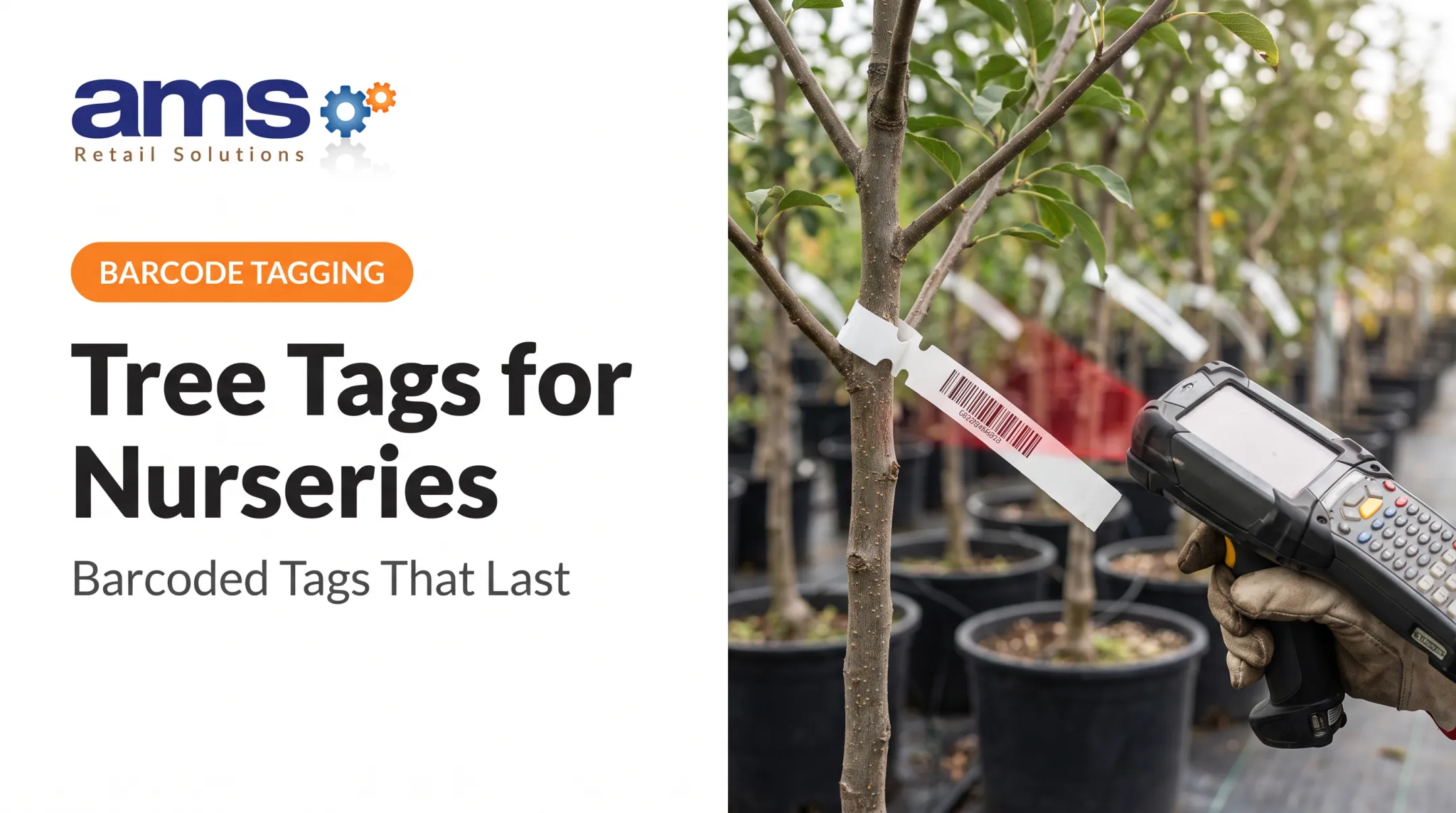
Attachment matters. Wire can abrade bark and restrict growth. Virginia Cooperative Extension's planting guidance says to remove tags and labels from trees and shrubs to prevent girdling. Use loose loops with room to grow, and tell customers to remove the tag after planting.
Bench cards and display signage
Bench cards (for example 7" x 5" or 11" x 7") carry shared information for a whole group of plants. They cost far more each than a stake, but one card can replace care text on dozens of tags.
The catch: every plant on that bench must truly match the claims. Mix in a shade plant and the sign is wrong.
Material choices for indoor and outdoor use
Ratings apply to named products, not to every plastic tag. Always request the supplier's spec sheet.
| Material | Typical specs |
|---|---|
| Coated stock | Two-sided topcoats for laser imaging; lifespan not specified |
| Polypropylene | UV stable 9-12 months; -23°F to 212°F |
| HDPE | One year outdoor UV; -70°F to 200°F |
| Polyester | Waterproof, fade and scuff resistant; outdoor life not specified |
| Aluminum | UV-stable black finish; lifespan not specified |

Some synthetic media turn brittle in subzero cold, so check the temperature range if you sell through winter. Recycling is limited as well: one synthetic maker lists its polyolefin film as #2 HDPE recyclable, but curbside acceptance of tags isn't universal.
Branded and specialty tags
Consistent color, logo, icons and layout help shoppers compare plants quickly. Badges for native status, pollinator value, deer resistance, edibility or pets are popular, but verify each one.
- A straight species isn't necessarily native or locally sourced, per Oregon State Extension.
- Minnesota restricts pollinator-beneficial advertising tied to certain systemic insecticides, and "grown free of" notations need an approved program.
- Patented varieties should carry "patent" or "pat." plus the number, or a web address linking to it, under 35 U.S.C. 287.
What to Print on Plant Tags and How to Print Them
Put the plant name and key buying information first, then care details, then operational data. The shopper in the aisle and the employee at the register both need to use the tag.
Essential customer-facing information
- Common and botanical name, plus cultivar (written in single quotes after the scientific name)
- Mature height and spread
- Light, water and bloom period
- Hardiness zone
- A photo or short identifying description
Explain terms plainly. The USDA's 2023 map uses 30-year averages of annual extreme minimum winter temperatures, per USDA's release. That means zones show average lows, not the coldest night ever.
Clear care copy earns its place beside those facts. A HortScience study of 985 container-garden respondents found price drove 70.7% of stated preference, care information 22.9% and color harmony 6.4%. Those are stated preferences, not measured sales lifts, but they show why clear price and care text earn their space.
Retail and inventory information
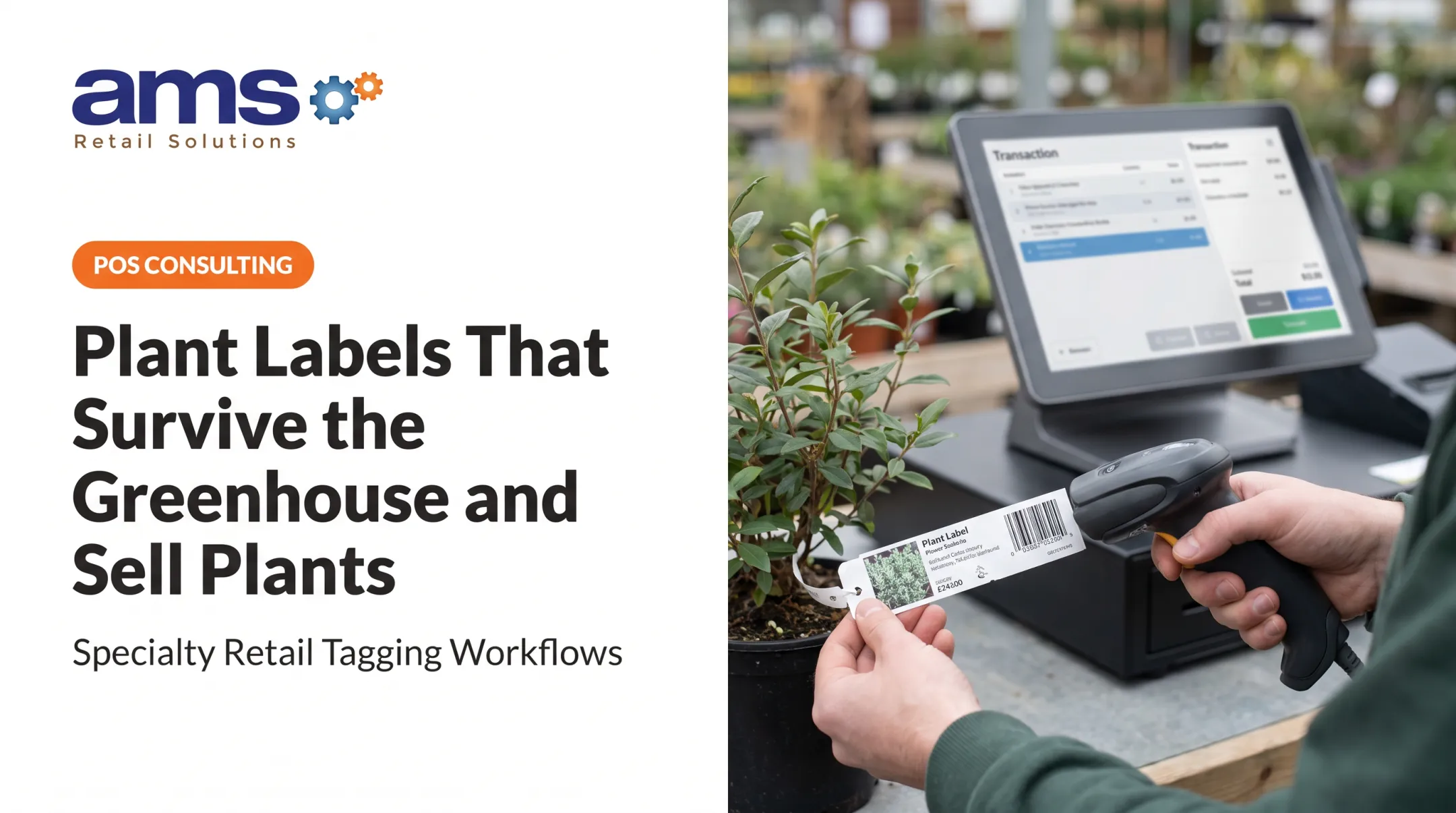
Add SKU, barcode, pot size, vendor and production date when staff need them. A QR code can link to extended care content.
Printing a fixed price on the tag is simple but risky. Markdowns and promotions leave a stale price on every tag. A barcode with a separate price label, shelf sign or POS lookup is more flexible when prices move often.
Printing methods and equipment
| Method | Best for | Watch out for |
|---|---|---|
| Thermal transfer | Black text and barcodes, standardized runs | Match ribbon (wax/resin vs. resin) to media |
| Inkjet | Color images, small changing batches | Thick stakes may need modified printers |
| Laser | Coated or polyester media, short runs | Check media is laser rated |
| Outsourced offset or digital | Premium branded, high-volume tags | Minimums and proof cycles |
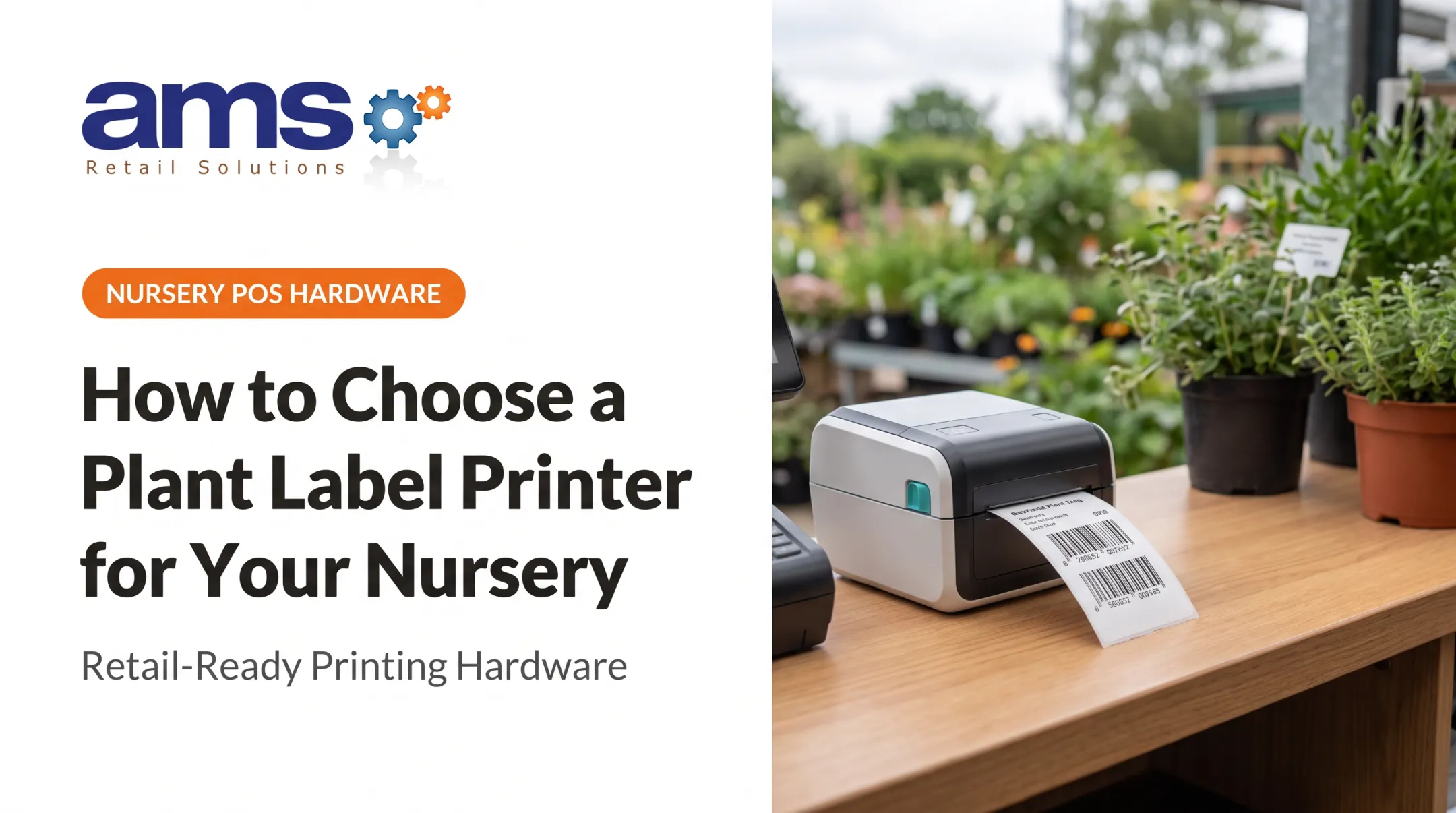
Thermal ribbons run roughly $45 to $54 per roll in published 2026 catalog prices, and one horticulture thermal printer lists at $5,459. A consumer hobby inkjet often fails on thick stake stock, so confirm media compatibility before you buy.
Artwork, layout, and readability
Use one template with clear type hierarchy, strong contrast and restrained color. Leave blank space around codes.
For 2D codes, the GS1 guide specifies quiet zones of 4X on all sides for QR with GS1 Digital Link and 1X for Data Matrix. Use black on white. Avoid red symbols, which may scan on a phone yet fail at a POS scanner.
Print a sample and put it on the sales floor. Onscreen proofs lie about distance and glare.
Variable-data workflow and quality control
- Clean the plant catalog.
- Map fields (name, size, price, barcode, care text) to the template.
- Generate records and print a proof.
- Check names, prices, barcodes, care text and images.
- Run physical tests: alignment, legibility, scanning, adhesion, water exposure, fading.
- Confirm the tag stays visible as the plant grows.
Keep one master template under version control. Seasonal staff should never pull outdated logos, prices or compliance language from an old file.

Plant Tag Pricing: Cost Drivers and Pricing Models
"Plant tag pricing" can mean what you pay for tags or the retail price printed on them. This section covers both, starting with the cost to buy or produce.
A low per-unit quote can hide large minimums, setup, manual data entry, waste and early reprints.
Main factors that determine tag cost
- Blank tag or media, ink, toner or ribbon
- Coating, cutting, attachment hardware
- Design, setup, proofing and software
- Labor and quality-control time
- Packaging and shipping
Size, material, print sides, color count, variable data and weatherproofing all move the number. Published 2026-27 supplier prices show typical ranges:
| Item | Published price |
|---|---|
| White hang tag, 2.5" x 5" (Hummert) | $22.70 per 100 |
| Blank stake, 4.5" x 1" (John Henry) | $45.77 per 1,000, in multiples of 2,000 |
| Printed Classic tag, 1" x 3.866" (MasterTag) | $67.85 per 1,000, first tier |
| Printed Mid XL Locking tag (MasterTag) | $147.46 per 1,000, first tier |
| Custom bench card, 7" x 5" (John Henry) | $6.33 each at 1; $2.75 each at 500 |
These are supplier list prices. Setup, proof and price-overprint fees aren't published, so ask for them.
Common pricing and purchasing models
- Preprinted bulk tags: cheapest per tag, but you're stuck if names or branding change.
- Blank tags printed in-house: flexible, with equipment and labor costs.
- Fully custom outsourced tags: best looks, with minimums (one catalog lists 500 per design).
- Print on demand: little waste, higher per-tag cost.
- Hybrid: branded stock plus variable labels.
Volume discounts save money until a variety is dropped or care text changes. Then the surplus is trash.
Estimating the true cost per usable tag
Use this formula:
(materials + printing + labor + finishing + shipping + setup + waste + reprints) ÷ usable finished tags
Divide by usable tags, not tags ordered. To compare vendors on equal footing, get each quote to state:
- Minimum order quantity
- Proofing fees and artwork charges
- Delivery terms and replacement policy
First-round proofs may be free, while changes after approval often cost extra.
Pricing information printed on the tag
What you print on the tag is separate from what you pay suppliers. Fixed prices work for stable, everyday items. For promotions, rely on a barcode, price label or POS lookup. Keep price formatting, sale rules, pot sizes and unit descriptions consistent with checkout and signage.
Price accuracy is a real standard. NIST Handbook 130 treats 98% or higher sample accuracy as passing a price inspection, per NIST's procedure. That's an inspection threshold, not a garden-center error rate, but it shows mismatches get scrutiny.

Building a seasonal tag budget
- Forecast by plant category, container size, assortment and promotions.
- Add allowances for shrink, loss and reprints.
- Start with a pilot order and track waste and replacement rates.
- Use results to negotiate volume pricing or revise the design.
Managing Plant Tags at Scale
Tags go wrong when nobody owns them. Assign ownership across the full tag lifecycle:
- Plant data and artwork approval
- Printing, receiving and distribution
- Replacement and end-of-season updates
Keep a central catalog of common and botanical names, varieties, images, care details, SKUs, prices and approved claims. Employees shouldn't build tags by hand.
A retail POS can help keep item records, prices, SKUs and stock aligned between the sales floor and checkout.
AMS Retail Solutions, an authorized NCR Voyix Counterpoint provider, offers a Garden Center & Nursery POS that tracks plant material by size and grade, handles seasonal inventory swings and supports barcode tag and signage printing. Evaluate it if your tags and register drift apart. Confirm exactly which tag formats and printers a setup supports before you buy.
Run a seasonal audit and confirm tags are:
- Attached and readable
- Accurate and scannable
- Consistent with current inventory and promotions
Frequently Asked Questions
What information should a garden center plant tag include?
Plant name (common, botanical, cultivar), light, water, mature size, hardiness and notable traits. Add SKU, barcode, QR code or price when staff need them.
What are the best materials for outdoor plant tags?
Coated stock, polypropylene, HDPE, polyester and aluminum all suit outdoor use, with different lifespans, looks and costs. Paper alternatives fit short seasons. Check supplier specs for UV and temperature ratings.
Which printing method is best for plant tags?
It depends on volume, variable data, color and media. Thermal transfer suits barcodes and black text; inkjet suits color; outsourced printing suits large branded runs.
How much do plant tags cost?
Published 2026-27 prices range from about $23 per 100 for plain hang tags to $147 per 1,000 for printed locking tags. Compare total cost per usable tag, including setup, labor and waste.
Can plant tags include barcodes or QR codes?
Yes. Leave quiet space, use high contrast (black on white), and test scanning on the finished tag with your actual scanner.
How can garden centers keep plant tag and POS information accurate?
Use a shared product database, locked templates and approval checks. Reconcile tags against inventory records, checkout pricing and current promotions each season.