
Introduction
A tag that smears after one week of overhead watering is worse than no tag. Staff guess at varieties, customers guess at light needs, and someone ends up repricing a bench by hand.
Labels matter to buyers. In a 2019 industry-funded survey reported by Nursery Management, 90% of garden-retail shoppers consult tags and six in 10 say tags influence what they buy. That is self-reported influence, not measured sales lift, but it is a strong signal.
This guide is for US garden centers and nurseries. It covers how to choose greenhouse-ready materials, pick printing that holds up, organize useful plant information, and connect labels to checkout.
Key Takeaways
- Clear, durable labels identify the plant and drive the sale at the bench.
- Match format, stock, and print method to where the plant travels.
- Lead with name, price, and light and water cues; skip dense copy.
- Pilot-test labels in real conditions before a full crop run.
- Keep label data tied to one item record from bench to register.
Why Greenhouse Conditions Change the Label Requirements
Greenhouses attack labels from several directions at once:
- Sunlight and heat: fading and faster degradation of thermal coatings
- Irrigation and humidity: smearing, peeling, lost adhesion
- Fertilizer and pesticides: chemicals that can react with coatings and discolor print
- Handling: rubbing that wears off printed information
A commercial label needs:
- Water resistance
- Smear and fade resistance
- Enough flexibility
- Readable contrast
- Secure attachment
- Compatibility with your printer or marker
Match the label to the plant's journey
Different stages need different labels:
- Propagation: plug labels and pressure-sensitive stock for damp trays and flats
- Pot level: thermal pot tags in styrene or polypropylene
- Hanging baskets and trees: hangtags and wraparounds
- Benches and crops: larger signs, sold in formats from 1-up to 4-up sheets
- Sold plants: tags that must stay legible in a customer's garden
A label that lives in a protected house for six weeks does not need the same specification as one that moves to an outdoor sales table and then goes home with a customer.
Validate the label before scaling it
Run a small pilot with your actual stock and print method. Expose samples to watering, condensation, sunlight, handling, and the chemicals you routinely use, following safe workplace procedures.

Treat manufacturer claims as product-specific. WestHort reports a wraparound tag still readable after 14 months of Seattle rain and sun, according to Epson's case study. That is one manufacturer-reported observation, not a guarantee for every label.
How to Choose Plant Label Materials and Formats
Start with the format, not just the material
Pick format by plant size, container, attachment method, and how often information changes.
- Stick-in pot labels: quick to place, easy to swap
- Hangtags and wraparounds: suit baskets, shrubs, and trees
- Bench cards and crop markers: for staff and for shoppers browsing
- Retail signs: for category or group messaging
Choose size and stake length that stay readable without blocking watering, transport, plant growth, or customer handling.
Compare common commercial label substrates
Commercial options get specific about grade and thickness:
| Material | Typical product |
|---|---|
| LDPE | 10-mil thermal slip-on tags |
| Polypropylene | 23-mil hangtags; 3.0 to 3.2-mil thermal-transfer stock |
| Polystyrene | 13-mil and 20-mil pot tags |
| Polyester | Self-adhesive labels for stakes, tags, flats, pots |
| Synthetic laser stock | 5, 7.5, and 10-mil sheets, sold as waterproof and UV-resistant |
| Metal | 0.005-inch aluminum or copper write-on tags |
| Wood | Birch veneer stakes, 12 to 24 inches long |

Never treat "plastic" as automatically fade-proof. UV and weather claims belong to named products, so ask for the grade and its test basis. Metal and wood suit longer-term outdoor or display use, while thin stocks suit temporary propagation.
Verify printing and writing compatibility
Substrate and print method work as a pair. Test the combination for smearing, adhesion, contrast, and fading after moisture and UV exposure.
- Resin thermal transfer: recommended by ARMOR-IIMAK for fertilizer, extreme temperatures, and abrasion
- Wax/resin: suited to less aggressive conditions
- Inkjet: thick stakes challenge ordinary printers; WestHort uses a modified printer with pigment inks
- Laser: purpose-made sheets are specified for laser, not inkjet; heavy stock needs a robust printer
- Permanent markers: waterproof, UV-filtered options exist, but no year-based fade guarantee
Design Plant Labels That Help Customers Buy
Put the most important information first
Use this hierarchy:
- Common name
- Botanical name or cultivar
- Price
- Size or container
- A short care or placement cue
In the same survey, shoppers prioritized light, watering, and plant name. Bloom season, height, hardiness, and fertilizer drew less interest. Add mature size, bloom period, harvest timing, pollinator value, or edible status when they help the decision, but don't crowd the tag.
Turn identification into merchandising
Short, benefit-led lines reduce uncertainty: "Full sun, blooms May to frost" tells a buyer more than a paragraph of specs.
Verify every claim first:
- Pet safety: the ASPCA list is not all-inclusive, so confirm plant identity
- Edibles: ornamental flowers from nurseries may not be grown for consumption and may carry unsafe treatments
- Hardiness: match labels to the 2023 USDA map, which uses 10°F zones and 5°F half-zones
Color, icons, and consistent placement can mark categories such as annuals, perennials, vegetables, shrubs, and houseplants, as long as legibility stays first.
Design for accuracy, accessibility, and trust
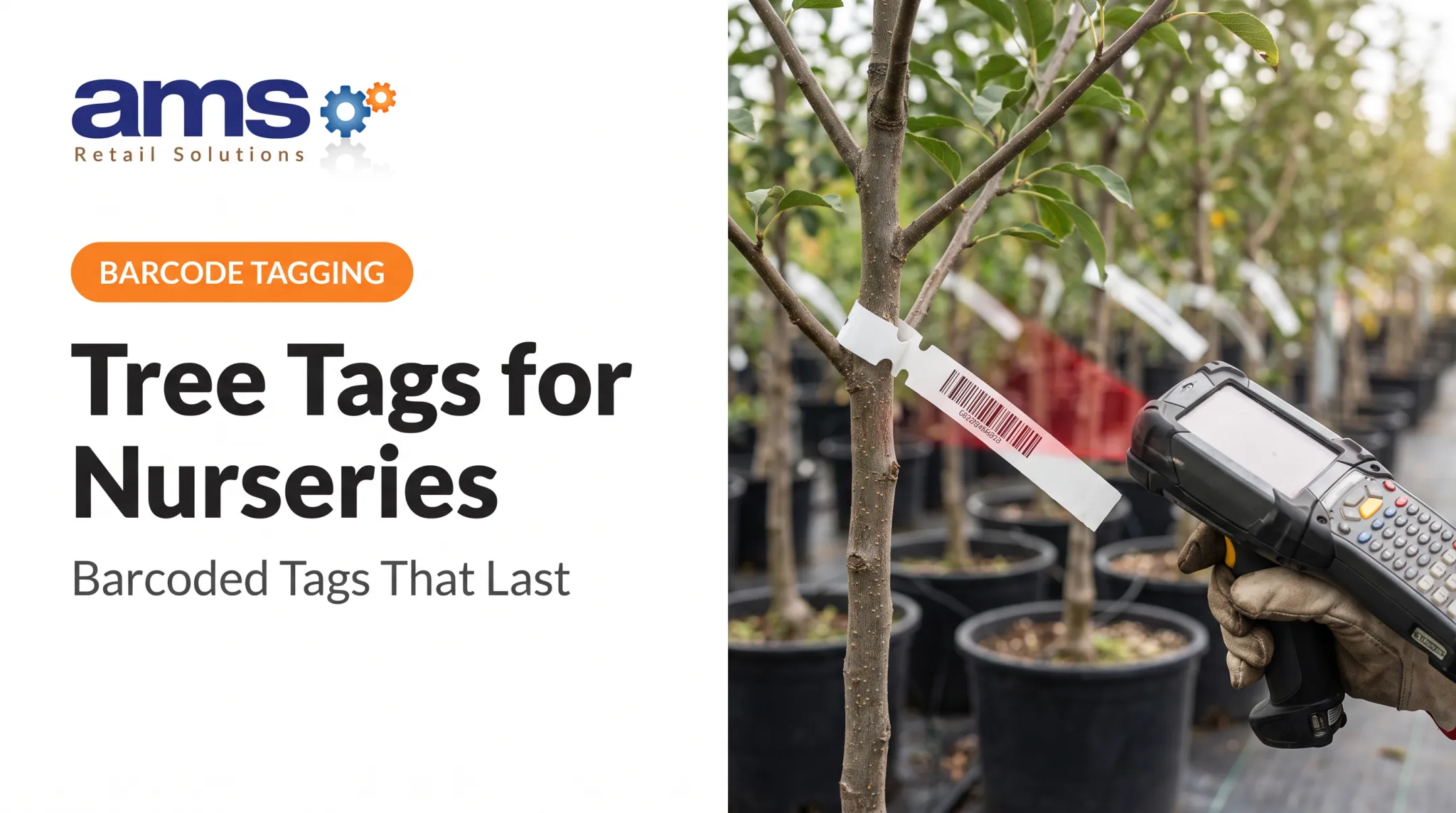
- Keep price visible and barcodes on a white background with clear quiet zones
- Use high-contrast type (WCAG’s 4.5:1 text ratio is a useful print reference, not a tag mandate)
- Use QR codes only if staff will maintain the linked pages
- Test the finished label with staff and customers at normal viewing distance
Rules vary. Maryland, for example, requires retail labels to show identity and price legibly at sale. Check your state's nursery rules.
Build a Repeatable Greenhouse-to-Checkout Label Workflow
Create one reliable source for plant information
Start every crop with a single record: variety, container size, price, care details, and an item or batch identifier. Carry that data through propagation, growing, pricing, and the sales floor.
Millcreek Gardens, in a Greenhouse Management report, moved from inconsistent supplier tags to custom tags across nearly 1,500 products, with Latin and common names, care information, and unique UPCs for inventory control. The report doesn't publish savings figures, but it does show how one product record can feed consistent tags and inventory control at scale.
Apply and audit labels consistently
Assign an owner for printing, proofreading, attaching, replacing, and auditing. Walk the benches on a schedule and look for:
- Illegible print
- Wrong variety names
- Missing prices
- Loose attachments
- Labels hidden by foliage
Connect physical labels to retail operations
Good tags only help if checkout matches them. AMS Retail Solutions is an authorized NCR Voyix Counterpoint provider that works with garden centers and nurseries on keeping item records, pricing, inventory, and checkout aligned.
Counterpoint's training documentation describes item records with descriptions, barcodes, and prices, plus label printing on price changes, receiving, and transfers. Confirm specific label printers, hardware, and integrations with AMS before you plan around them.

Conclusion: Make Every Plant Label Work Harder
A label that works combines a suitable format, a durable substrate, a compatible print method, useful customer information, and steady quality control. Pilot first, then scale.
Those labels only pay off when checkout and inventory keep up. If your POS and inventory workflow makes plant sales slower or less accurate than they should be, review it. AMS Retail Solutions is a practical next step for garden centers and nurseries evaluating NCR Voyix Counterpoint.
Frequently Asked Questions
What is the best way to label outdoor plants?
It depends on exposure, plant life cycle, visibility, and update frequency. If labels face sun, rain, or handling, test a durable substrate with fade-resistant printing first.
What are the best plant labels that don't fade?
Fade resistance comes from the combination of substrate, print process, UV, and moisture. Review manufacturer specifications and test samples rather than trusting the word "permanent."
What information should be included on a retail plant label?
Include plant name, cultivar where relevant, price, container information, key care needs (especially light and water), and one or two verified benefits.
Which plant label material is best for greenhouse use?
No material wins universally. Weigh humidity, watering, chemical exposure, handling, outdoor transition, label lifespan, and whether the label is printed or handwritten.
How can nurseries keep plant labels readable through watering and handling?
Use compatible stock and ink, strong contrast, and secure placement. Test small batches, inspect routinely, and replace damaged or inaccurate labels promptly.