
Introduction
One big inventory count a year gives you a snapshot that is stale almost immediately. Stores close or slow down, staff count for days, and the number you get says little about what went wrong in the previous eleven months.
Meanwhile, sales, returns, receiving errors, transfers, damage, and shrink keep pulling records away from reality. National shrink averaged 1.6% of sales in FY 2022, according to NRF, and that is a national retail figure, not a specialty-store benchmark.
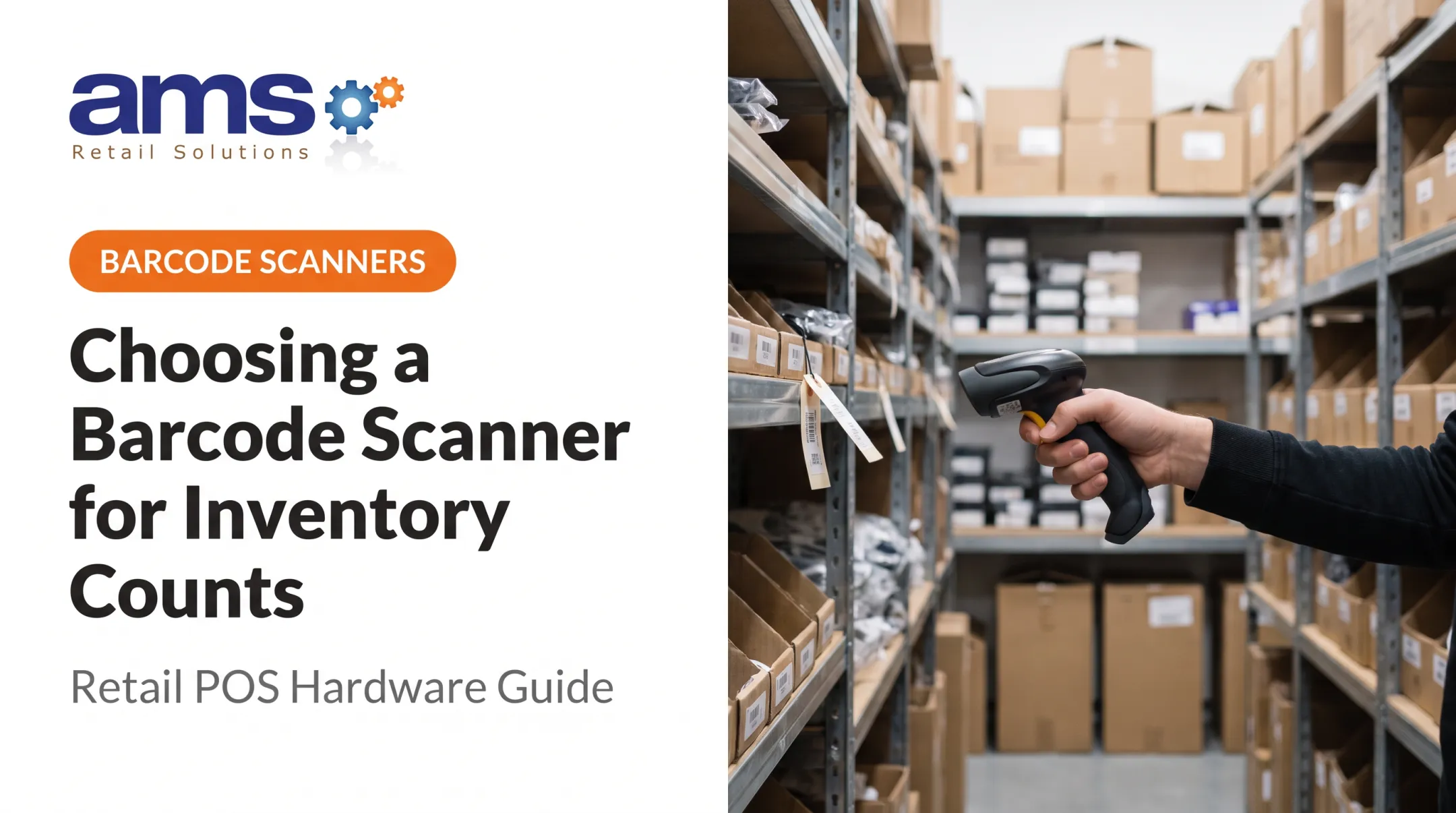
Cycle counting is a recurring process of checking selected products or locations against inventory records. This guide gives specialty retailers a practical plan to build one, without assuming every full physical count can disappear.
Key Takeaways
- Cycle counting spreads verification across small scheduled counts, so most selling continues.
- Count by value, velocity, seasonality, shrink risk, and past variances, not all SKUs equally.
- Replacing an annual count requires a clean baseline, written procedures, owners, and variance follow-up.
- Tax, audit, or lender rules may still call for a full count.
Cycle Counting vs. Annual Physical Counts: What Changes for Retailers?
A physical count checks all inventory at once. A cycle count checks a subset (selected SKUs, categories, locations, or risk groups) on a rotating schedule. Oracle's Xstore documentation draws the same line: full counts cover all in-stock items, cycle counts cover part of the stock.
Where inventory drift comes from
Between counts, records slip for ordinary reasons:
- Receiving mistakes and unit-of-measure errors
- Unrecorded returns or store-to-store transfers
- Damaged, spoiled, or misplaced merchandise
- Theft and other shrink
How the two approaches compare
| Factor | Annual count | Cycle count |
|---|---|---|
| Disruption | Concentrated, often a shutdown or slowdown | Small, spread out |
| Labor | One big push | Short recurring tasks |
| Detecting errors | Once a year | Within the count cycle |
| Finding root causes | Hard; the error could be months old | Easier; the window is narrow |
| Stock availability | Can be affected during the count | Mostly unaffected |
An annual count can tell you records were wrong. It rarely tells you when or why. A recurring count gives you checkpoints close enough to the event to investigate.
When to keep a full count
Keep a full physical count when:
- You are implementing a new system
- Opening records are unreliable
- You suspect widespread shrink
- Financial reporting calls for it
- An auditor or lender requires it
The IRS says in Publication 538 that physical inventory is required at "reasonable intervals," and tax valuation at year start and end is a separate requirement.
Audit standards such as PCAOB AS 2510 accept alternatives only when results are substantially equivalent to counting all items annually, and the auditor still observes and tests. Cycle counting is not an automatic exemption. Confirm with your accountant.
How to Replace Annual Counts with a Retail Cycle Counting Program
1. Establish a verified starting point
If records are unreliable, start with a full physical count or another thoroughly verified baseline. NetSuite's guidance describes correcting discrepancies this way before starting recurring counts. First resolve open receiving, transfer, return, damage, and adjustment transactions. Otherwise you will be counting against bad data.
2. Define the population and owners
Document every store, department, back room, stockroom, display area, SKU, and unit of measure in scope. Then assign owners for:
- Scheduling counts
- Counting
- Approving adjustments
- Reviewing trends
3. Build the count list and schedule
Use SKU value, sales velocity, margin, seasonality, shrink history, stockout risk, and prior variances to decide what gets counted and how often. Treat seasonal or perishable stock separately. A garden center's live plants and a shelf of fertilizer do not need the same rhythm.
4. Control transactions during each count
Pause or record sales, receiving, transfers, and returns for the selected items or locations. NetSuite calls for freezing activity on counted items. If your POS cannot pause activity, require timestamped reconciliation of transactions before you post the result.
5. Count, verify, and investigate
Counters confirm the item description, SKU, location, unit of measure, sellable condition, and quantity. When a discrepancy exceeds your documented tolerance, do an independent recount or supervisor review. No universal tolerance exists, so set your own and write it down.
6. Correct records and improve the process
Post adjustments only after investigating likely causes, and only by authorized staff. Record the variance and corrective action. Then look for repeat patterns that point to receiving, merchandising, training, theft, or system problems.
7. Roll out in stages
Pilot in one store, department, or high-risk category. Measure completion and variances, refine the procedure, then expand. NetSuite also suggests repeatedly counting a small control group to expose counting-technique errors early.

Choosing a Cycle Counting Method and Schedule for Retail Inventory
ABC or value-based counting
ASCM defines ABC analysis as ranking items by annual dollar volume (price times projected volume) or another criterion, then grouping them into A, B, and C classes. The 80/20 rule is a planning principle, not a split you must match. ASCM notes that A items commonly make up 10% to 20% of items and 50% to 70% of dollar volume.
Velocity-based counting
Fast-moving, frequently handled SKUs collect errors faster and may need more frequent counts. Slow movers still deserve attention if they are high-value, seasonal, perishable, or easy to steal.
Location-based counting
Count by sales floor, back room, department, or storage zone when misplaced stock or inaccurate location records are the main problem, or when your footprint is large. Xstore divides full counts into manageable store sections for this reason.
Exception-based counting
Trigger a count after:
- A stockout or negative on-hand balance
- A receiving discrepancy or short shipment
- An unexpected return or unusual adjustment
- A reorder event
- Repeated customer complaints about unavailable stock
Hybrid counting
Most specialty retailers end up here. Combine value, velocity, seasonality, location, and exception triggers so a garden center, farm market, or outdoor retailer can apply different controls to different categories.
Setting frequency
Base the schedule on SKU count, staffing, transaction volume, historical variance, seasonality, and store size. One published example from Shopify's cycle count guide counts A items monthly, B quarterly, and C once or twice a year. Treat that as an illustration, not a standard.

Retail Cycle Counting Best Practices and KPIs
Standardize the procedure
Write down the rules for:
- Barcode or SKU verification
- Unit-of-measure handling
- Location labeling and count sequence
- Damaged or unsellable goods
- Transaction cutoffs and recount rules
- Adjustment approvals and documentation
Train counters and separate duties
Run practice counts before going live. Where staffing allows, have someone other than the counter approve material adjustments. Platforms support this: Xstore restricts final count posting by security privilege.
Measure accuracy and causes
| KPI | How it is measured |
|---|---|
| Inventory record accuracy | SKUs matching physical stock exactly, divided by SKUs counted |
| Inventory inaccuracy | Discrepant SKUs / total evaluated SKUs x 100 |
| Shrink rate | (Book value - actual value) / book value x 100, or shrink divided by sales |
| Unit and dollar variance | Counted quantity or value versus system quantity or value |
| Stockout rate | Stockout orders / total customer orders x 100, or share of items unavailable |
Also track these operational metrics:
- Recount rate
- Completion rate
- Adjustment frequency
- Repeat-cause rate
Pick one definition per metric and stick with it. ECR notes that no single standard inaccuracy measure exists, and that a binary measure hides error size and direction. NRF's 1.6% shrink uses sales as the denominator, so it is not comparable to an inventory-value shrink rate. Independent specialty retail lacks a widely published accuracy benchmark, so set targets from your own baseline.
Use POS and Inventory Technology to Make Cycle Counting Continuous
An integrated POS connects sales, returns, receiving, transfers, adjustments, and on-hand records. Staff then compare physical stock to a current system record, not an outdated spreadsheet.

Capabilities to check before you buy
- Count-task creation
- Barcode or mobile scanning
- Blind counts
- Location-level visibility
- Variance alerts
- Approval controls and audit history
- Multi-store reporting
- Offline continuity, if your stores need it
- Exportable accuracy reports
Ask any vendor to demonstrate each one with your own data.
Where NCR Voyix Counterpoint fits
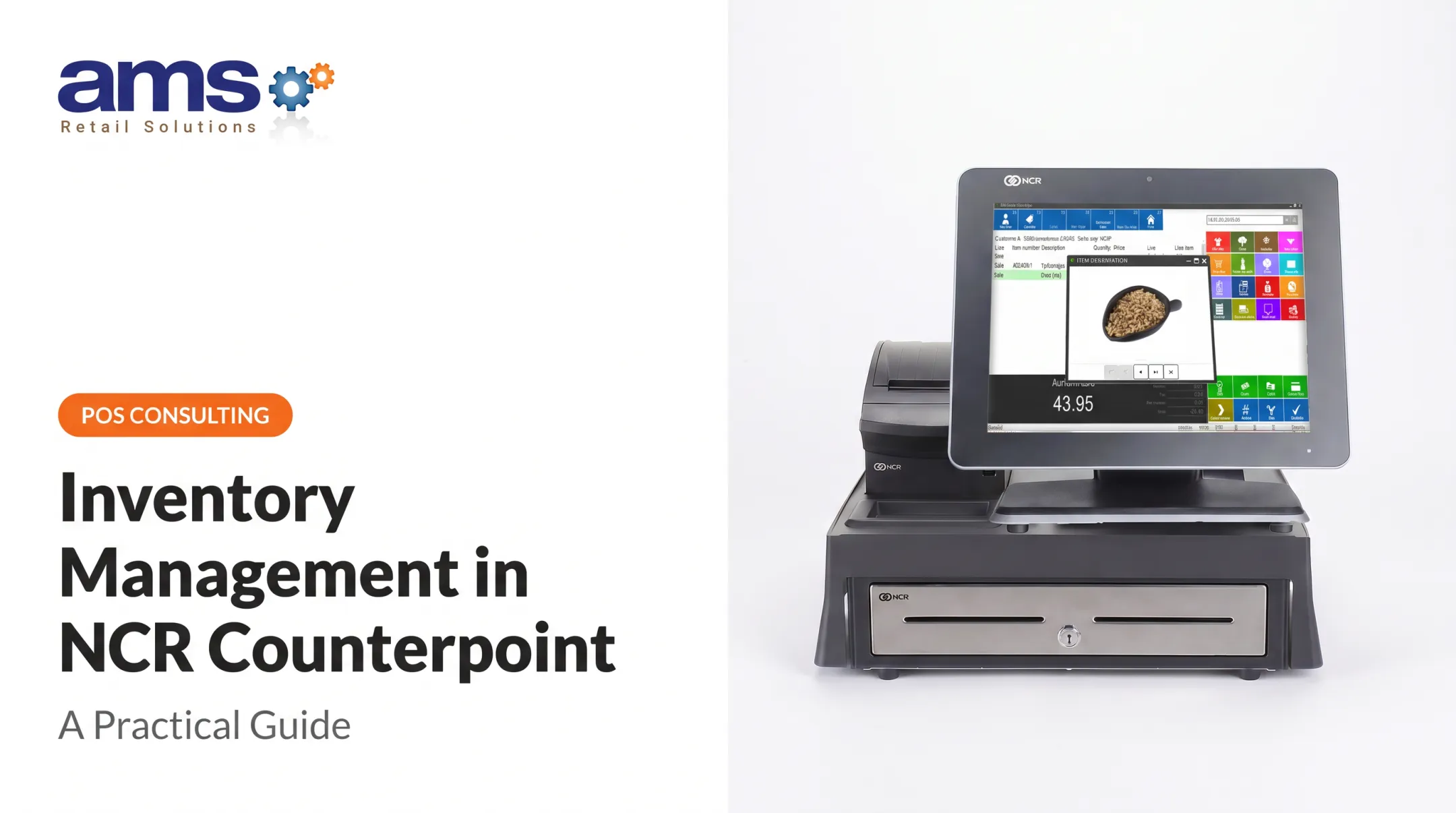
AMS Retail Solutions is an authorized NCR Voyix Counterpoint provider offering a single-source POS for one store or many. Counterpoint's documentation covers:
- Physical counts, count entry, and CSV import and posting
- Physical Count Edit List and Journal reports with counted and frozen quantities and variances
- Inventory Adjustments Journal
- Real-time inventory across locations
- Transfers between locations
In a demo, confirm offline counting (offline sales are documented; offline counting is not), count-specific barcode workflow, and separate count-versus-approval permissions.
AMS Retail starts by learning how your business operates, then fits the count workflow to your stores. If you want to see how a count workflow would run in your stores, talk to a specialist about a demo or consultation.
Bottom Line: Make Inventory Accuracy a Routine Retail Control
Replacing an annual count is a process change, not a switch from paper to software. You need:
- A trusted baseline
- A risk-based schedule
- A controlled counting workflow
- Authorized adjustments
- Root-cause follow-up
Next step: Pick the categories or locations with the greatest customer, cash-flow, seasonal, or shrink risk. Run a documented pilot. Use the results to build your full calendar, and confirm any continuing full-count obligations with your accountant, auditor, or lender.
Frequently Asked Questions
What is the role of cycle inventory in supply chain management?
Cycle inventory is stock depleted by customer demand and replenished by supplier receipts. Cycle counting is the separate process of verifying records. Accurate counts support replenishment, service levels, and working capital.
What is the 80/20 rule for inventory?
It is the Pareto principle: a small share of items drives most of the value. It informs ABC counting, but treat it as a guideline and validate it against your own sales, margin, and shrink data.
What are the 5 stages of the inventory management process?
A common framework is planning, purchasing, receiving, storing and tracking, and selling. Terminology varies, and NetSuite lists seven stages. Cycle counting belongs in tracking and control.
How often should retailers perform cycle counts?
It depends on value, velocity, seasonality, shrink exposure, past variance, SKU volume, and staffing. Count high-risk items more often. No universal interval exists.
Can cycle counting replace an annual physical inventory count?
It can replace the annual count as the routine accuracy control, but not automatically. Tax, audit, lender, or internal-policy requirements may still call for a full count.